
Japandi Kitchen Design Ideas That Blend Minimalism and Warmth
There’s something truly special about stepping into a kitchen that feels warm, welcoming, and beautifully balanced. Japandi kitchen design ideas bring together the minimalist elegance of Japanese interiors with the cozy, natural touches of Scandinavian style. The result? A space that feels calm, functional, and timeless. For anyone wanting a kitchen that encourages mindful living while still looking chic, Japandi design is a perfect choice.
The beauty of Japandi kitchens is that they aren’t just about looks. They’re about creating a space where cooking feels less like a chore and more like a peaceful ritual. The thoughtful combination of natural materials, soft neutral tones, and clutter-free layouts makes every corner feel purposeful. If you’ve been searching for kitchen inspiration that blends simplicity with warmth, these Japandi kitchen design ideas will make you fall in love.
Why Japandi Kitchens Are So Popular
I’ll be honest with you, I didn’t fall in love with Japandi design overnight. At first, I thought it was just another interior trend. But when I really dug into it, I realized it’s more of a lifestyle. Japandi kitchens combine natural materials like wood and stone with uncluttered spaces that let you breathe.
Imagine soft light filtering through linen curtains, wooden shelves with just a few ceramics, and a cozy nook where you can sip your morning coffee in peace. It’s the kind of design that makes you want to slow down and enjoy the little things.
Warm Neutral Color Palette

A Japandi kitchen always begins with a warm neutral palette. Soft shades like beige, ivory, taupe, and warm grays dominate the space. These colors invite a sense of calm and create the perfect backdrop for natural textures and subtle decor. A muted palette also ensures that every detail, from wooden cabinets to stone countertops, stands out without competing for attention. Pairing lighter walls with darker wood finishes enhances depth while keeping things understated.
The magic of these tones is how they never overwhelm. They keep the kitchen light, airy, and timeless. Earthy hues remind us of nature, and in Japandi design, nature is always at the center. Even a simple off-white wall with wooden shelves can bring that perfect balance of serenity and style into your daily cooking routine.
Natural Wood Cabinets


Source – InteriorDesign
Wood is the soul of Japandi interiors. In a Japandi kitchen, natural wood cabinets take the spotlight. Instead of glossy finishes, the wood is often left raw, matte, or lightly polished to showcase its natural grain. Oak, walnut, or ash works beautifully, bringing warmth and authenticity to the kitchen.
This approach is all about honesty in materials, no flashy veneers or artificial looks. A row of wooden cabinets instantly adds a grounded feeling, making the kitchen feel cozy yet modern. Combining lighter wood with darker countertops is a simple way to balance contrast, while pairing wood with sleek black handles creates a modern, minimalist vibe. It’s functional, elegant, and deeply connected to nature.
Read – White Oak Kitchen Cabinets
Open Shelving With Simplicity

Forget heavy upper cabinets that box in your space. Japandi kitchen design often features open shelving to create a room with an airy, uncluttered feel. Simple wooden shelves enable you to display everyday essentials, such as ceramic bowls, glass jars, or woven baskets, in an aesthetically pleasing manner.
The beauty lies in restraint. Instead of overcrowding, each shelf holds just a few items that serve both function and style. A single row of shelves above the countertop can also make the kitchen look more spacious, especially in smaller homes. With Japandi, it’s about curating, not cluttering. Every piece on display should feel intentional, making the kitchen a place where beauty and function meet seamlessly.
Read – Open Kitchen Designs
Minimalist Lighting Fixtures

Lighting is never an afterthought in Japandi design. Pendant lights with simple, clean lines add character without being overwhelming. Think linen-covered lampshades, black metal pendants, or soft globe lights hanging above a kitchen island.
Natural light plays an even bigger role. Large windows without heavy curtains let sunlight flood the kitchen, creating a natural, uplifting vibe. When artificial lighting is needed, it should complement, not dominate. Using soft, warm bulbs instead of harsh white light keeps the mood cozy. Minimalist fixtures don’t just illuminate, they enhance the overall balance and harmony of the space.
Functional Kitchen Islands
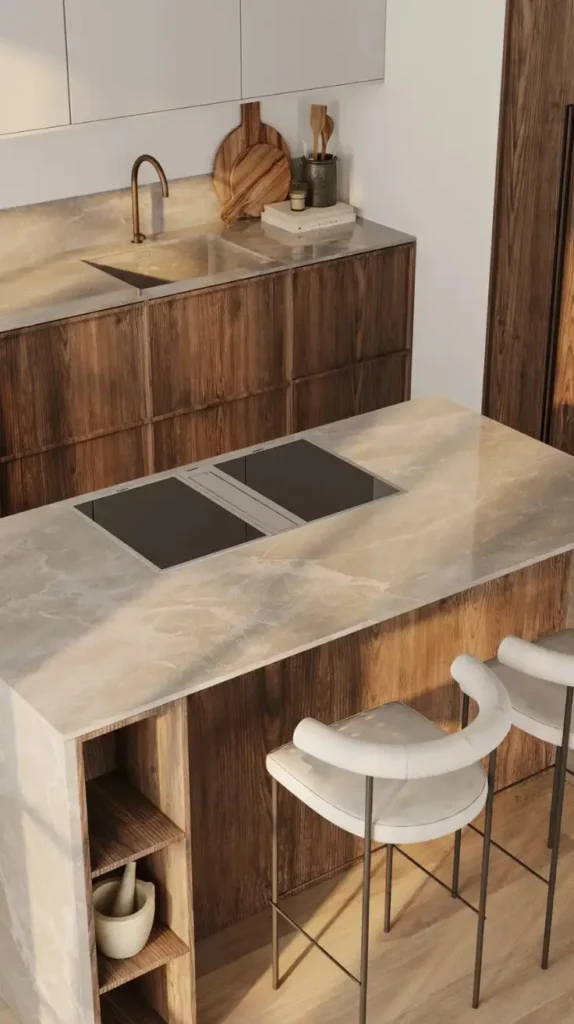
A Japandi kitchen island is not just for show; it’s meant to be functional. The island often doubles as a prep station, dining spot, or storage unit, keeping the space practical while adding elegance. Designed with clean lines and often finished in natural wood or stone, it becomes a centerpiece without overpowering the kitchen.
To maintain the Japandi vibe, keep decor minimal. A simple vase with fresh greenery or a ceramic bowl can bring life without cluttering. Adding drawers or cabinets inside the island provides hidden storage, ensuring that the surface remains clean and free from chaos. It’s about making the island useful while still blending with the calm aesthetics of the room.
Stone Countertops With Texture


Source – koakdesign
In Japandi kitchen design ideas, materials matter deeply, and stone countertops are one of the most striking features. Quartz, granite, or even textured concrete creates a sleek yet earthy surface. Their subtle variations in tone and texture reflect the Japanese love for wabi-sabi, the beauty of imperfection.
Pairing stone with natural wood enhances the organic balance. The cool texture of stone offsets the warmth of wooden cabinets, achieving harmony in design. Beyond beauty, stone countertops are practical, durable, and easy to clean. It’s the kind of material that grows more charming with time, making the kitchen both timeless and functional.
Hidden Storage Solutions

Clutter has no place in a Japandi kitchen. Hidden storage is a must for maintaining the minimalist look. This means sleek drawers, pull-out pantry systems, and cabinets that hide appliances like microwaves or coffee machines.
The goal is to create a kitchen that feels peaceful and uncluttered. When everything has its place, the countertops remain free, allowing the natural materials and design elements to shine. Even a small kitchen can look spacious when storage is thoughtfully designed. Japandi design teaches that beauty lies in simplicity, and hidden storage makes this philosophy possible in everyday living.
Soft Textiles For Warmth

While Japandi kitchens lean minimal, they’re never cold. Textiles play a quiet but powerful role in softening the space. Linen curtains, cotton seat cushions, and woven rugs bring texture and warmth.
Adding textiles in muted shades, like beige or soft gray, complements the overall palette without disrupting the calm. Even a small linen runner on the dining table or a cotton kitchen towel displayed on a hook can make the space feel homely. This layer of comfort balances the clean lines and hard textures, ensuring the kitchen feels welcoming instead of stark.
Indoor Greenery

Bringing nature indoors is a cornerstone of Japandi design. A few carefully chosen plants in ceramic or clay pots can completely transform the kitchen. Herbs like basil or rosemary not only add greenery but also bring a functional touch for cooking.
The trick is to keep it minimal; one or two plants are enough to breathe life into the space without overwhelming it. Hanging plants by the window or placing a small bonsai on the countertop aligns perfectly with Japandi’s love for nature and mindfulness. It’s a reminder that even the smallest greenery can make a kitchen feel alive.
Read – Kitchen Garden Ideas
Black Accents For Contrast

Neutral tones dominate Japandi kitchens, but a dash of black provides a striking contrast. Black handles, faucets, pendant lights, or stools can break the monotony and add depth.
This doesn’t mean overwhelming the kitchen with dark colors. Instead, it’s about small touches that anchor the room. A matte black faucet against a white sink or black hardware on wooden cabinets creates a chic, modern look while staying true to Japandi principles. It’s proof that even minimal accents can make a big difference in design.
Low-Maintenance Layouts
Japandi kitchens prioritize ease of use. Layouts are designed to be practical and efficient, often following the triangle rule, placing the sink, stove, and fridge within easy reach.
The design avoids unnecessary frills and focuses on what makes life easier. Wide walkways, streamlined storage, and open surfaces all contribute to a kitchen that functions smoothly. It’s a reminder that Japandi isn’t just about beauty; it’s about making everyday tasks simpler and stress-free.
Handmade Ceramics As Decor

Japandi design treasures craftsmanship, and handmade ceramics are a beautiful way to highlight this. Simple bowls, mugs, or plates displayed on open shelving add a personal, authentic touch.
Each piece carries character, often with slight imperfections that celebrate the wabi-sabi philosophy. These ceramics don’t need to match perfectly; the charm comes from their individuality. Whether in muted tones or earthy glazes, ceramics add warmth and artistry without disrupting the minimal design.
Matte Black Fixtures

Another key detail in Japandi kitchens is the use of matte black fixtures. Faucets, cabinet handles, and even light fittings in matte black create a striking yet subtle effect.
Unlike shiny chrome or brass, matte finishes feel grounded and timeless. They blend seamlessly with wood, stone, and neutral colors, enhancing the overall sophistication. Just a few black fixtures are enough to elevate the look, keeping the kitchen modern but not flashy.
Harmony Between Function And Beauty
The ultimate Japandi kitchen design idea is balance. Every element should serve both beauty and function. From the placement of furniture to the choice of materials, nothing is purely decorative or purely practical; it’s always both.
A well-designed Japandi kitchen feels calm, intentional, and timeless. It’s not about following a trend but creating a space that nurtures daily life. With its focus on simplicity, natural elements, and harmony, Japandi design proves that kitchens can be both beautiful and functional, giving the heart of the home a style that lasts.
Read

She has nearly 5 years of expertise in organic gardening, plant pests and diseases, landscape design, horticulture, and permaculture. She is a Master Gardener and Horticulturist.
She includes keywords and phrases that raise the content’s search engine ranking because she has a good grasp of SEO best practices.
- Hall Colour Combination Ideas to Make Your Home Look Beautiful and Welcoming - October 21, 2026
- Red Christmas Tree Ideas to Make Your Home Feel Magical This Holiday Season - October 20, 2026
- Front Porch Swing Ideas to Create a Cozy Outdoor Retreat - October 16, 2026