Bathroom Lighting Ideas to Make Your Space Feel Brighter, Warmer, and More Beautiful
A bathroom can have beautiful tile, elegant fixtures, and stylish furniture, yet still feel dull if the lighting is wrong. A harsh ceiling bulb can make a relaxing space feel cold, while weak lighting around the mirror can turn simple morning routines into a frustrating experience. The right bathroom lighting ideas can completely change that feeling. With a few thoughtful choices, even a small bathroom can look brighter, more welcoming, and surprisingly luxurious.
Good lighting does more than help people see. It creates atmosphere, highlights architectural details, makes colors look better, and brings personality into an otherwise practical room. From glowing vanity mirrors to dramatic pendant lights, there are countless ways to brighten a bathroom without making it feel overly complicated.
The exciting part comes next: some of the most effective solutions are also among the simplest.
Add Wall Sconces Beside the Mirror
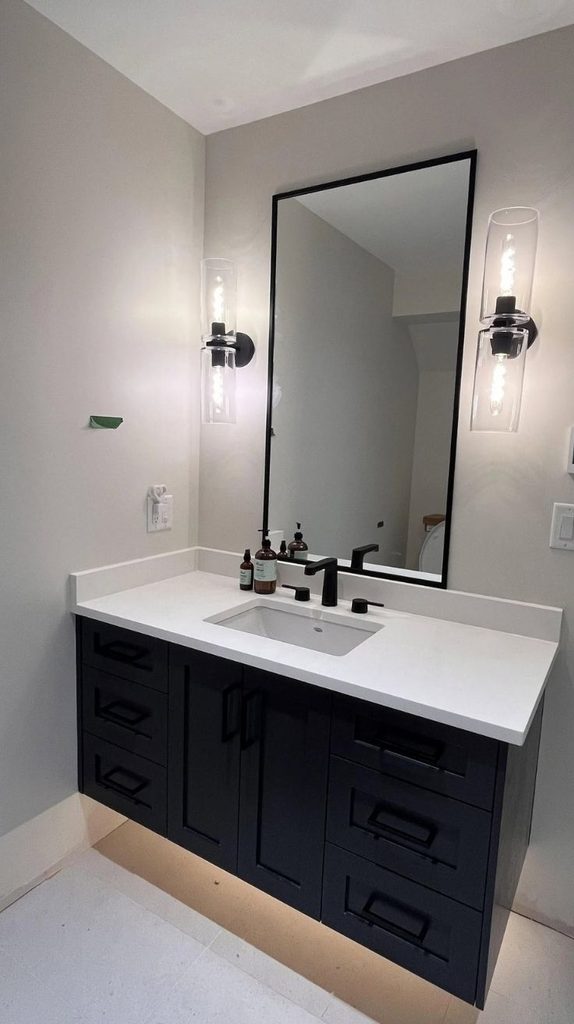
Wall sconces are one of the easiest ways to improve the lighting around a bathroom mirror. Instead of depending entirely on a ceiling fixture, sconces place light closer to the face, helping reduce unpleasant shadows during shaving, applying makeup, brushing teeth, or getting ready for the day.
For a balanced appearance, two matching sconces can sit on opposite sides of the mirror. This arrangement spreads illumination evenly across the face and creates a polished, symmetrical look. It works especially well in bathrooms with a traditional, transitional, modern, or contemporary design.
The style of the fixture can also change the personality of the room. Clear glass shades create an airy appearance, while frosted glass gives the space a softer glow. Matte black fixtures can add a modern edge, and brushed brass can bring warmth and elegance.
Placement matters just as much as appearance. Fixtures should provide useful facial illumination without shining directly into the eyes. The goal is comfortable, even light rather than an overpowering beam.
For smaller bathrooms, slim sconces are particularly useful because they provide strong task lighting without taking up much wall space. In a larger bathroom, wider fixtures can become decorative features themselves.
Choose a Backlit Bathroom Mirror
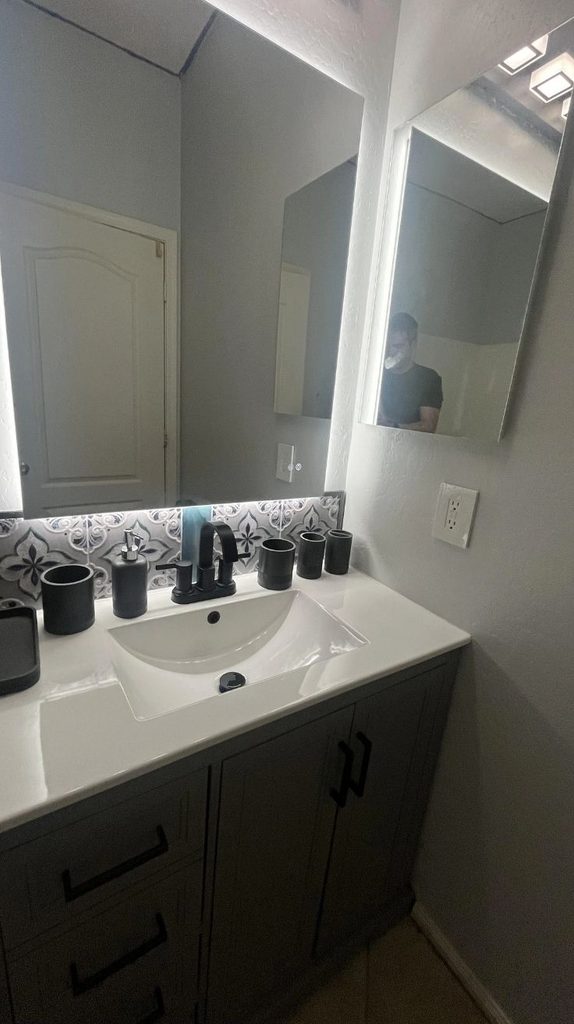
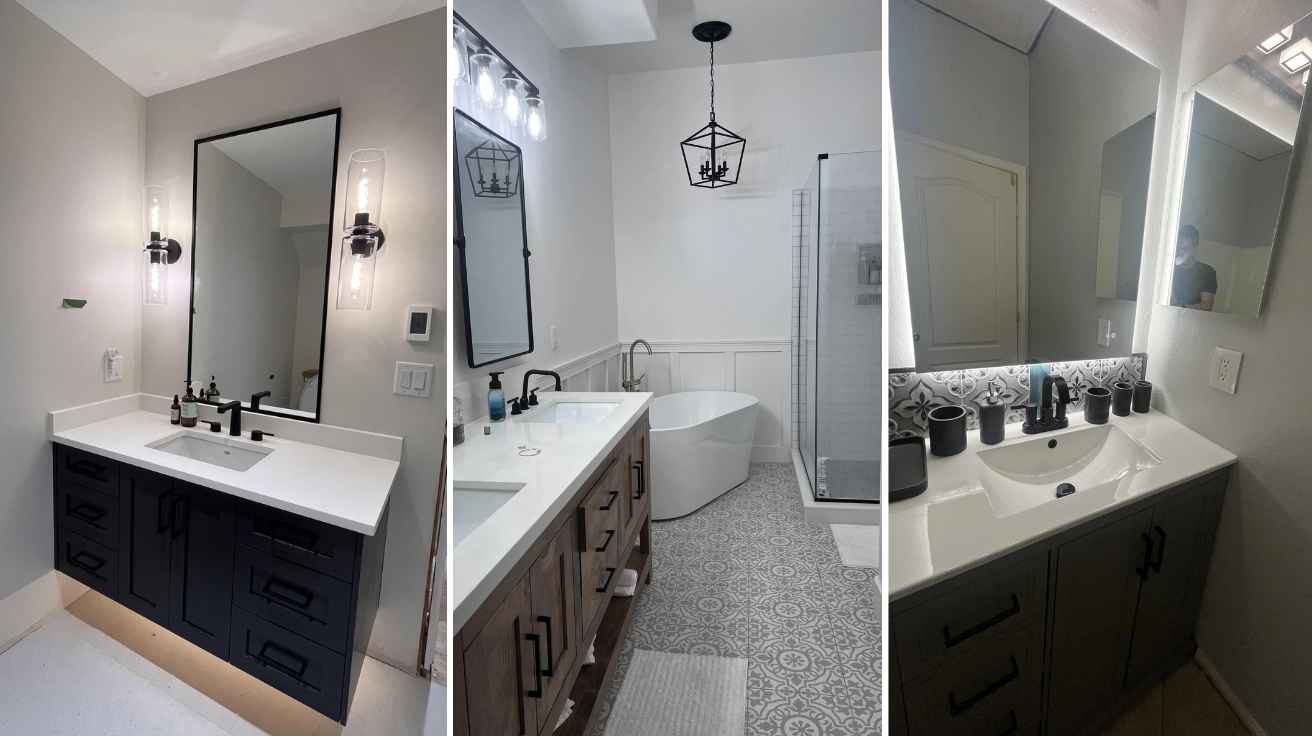
A backlit mirror can bring a beautiful glow to a bathroom while serving a practical purpose. LED lighting installed behind the mirror creates a soft halo around its edges, producing an attractive floating effect on the wall.
This style works especially well in contemporary bathrooms where clean lines and uncluttered surfaces take center stage. The indirect illumination feels gentle because the light does not shine directly toward the eyes.
Backlit mirrors are available in many shapes and sizes. Round mirrors can soften bathrooms filled with straight lines, while rectangular designs work naturally above long vanities. An arched mirror can introduce a more decorative character without overwhelming the room.
Some illuminated mirrors include additional features such as adjustable brightness, anti-fog technology, touch controls, and different color temperatures. For people who prefer straightforward bathroom improvements, however, the lighting effect itself can be enough.
The best designs provide useful illumination without turning the mirror into an overly bright focal point. Soft white illumination often creates a pleasant balance between functionality and relaxation.
A backlit mirror also works beautifully as evening lighting. Instead of turning on every fixture in the room, a gentle glow can provide enough illumination for nighttime routines while keeping the atmosphere calm.
Install Recessed Ceiling Lights
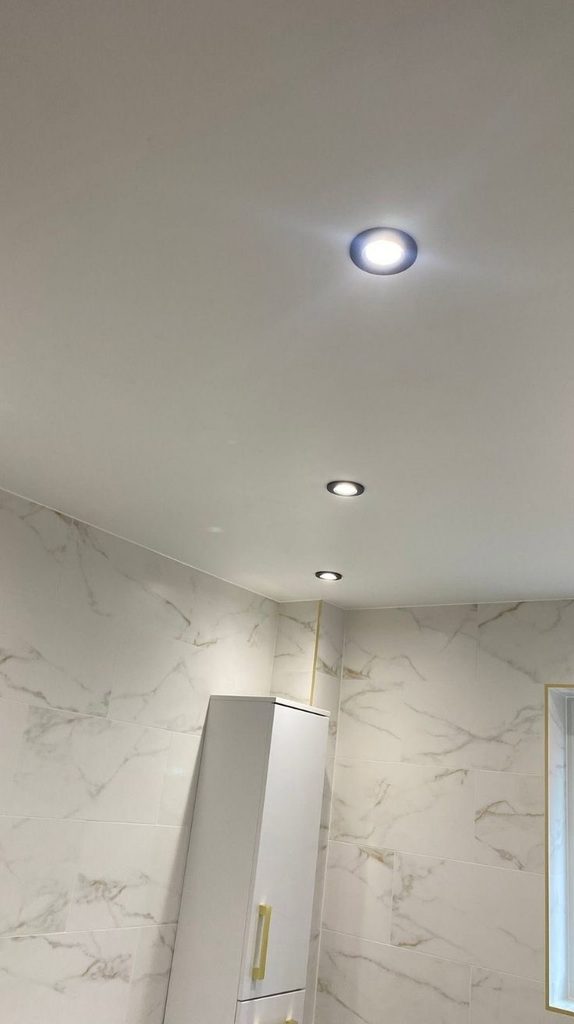
Recessed lights offer a clean and understated approach to overhead illumination. Because the fixtures sit inside the ceiling, they avoid creating visual clutter and work beautifully in bathrooms where a minimalist appearance is important.
One central light can work in a compact powder room, but larger bathrooms usually benefit from several recessed fixtures. Spacing them throughout the room can provide more consistent illumination and reduce dark corners.
Recessed lighting is particularly useful around areas that need dependable visibility. A fixture near the shower entrance, another near the vanity, and additional lights toward the center of the room can create a layered effect.
However, placing every light directly above the head can create unflattering shadows. Combining ceiling illumination with side lighting around the mirror produces a much more comfortable result.
The color temperature also deserves attention. Very cool white light can make some bathrooms feel clinical, while warmer light can create a softer and more relaxing atmosphere. A neutral white range is often a practical choice for everyday bathroom tasks.
When selecting recessed fixtures, bathroom safety should remain a priority. Wet and damp locations require fixtures rated appropriately for their position. Areas directly exposed to water need suitable protection, and electrical work should follow local building and safety requirements.
Hang a Statement Pendant Light
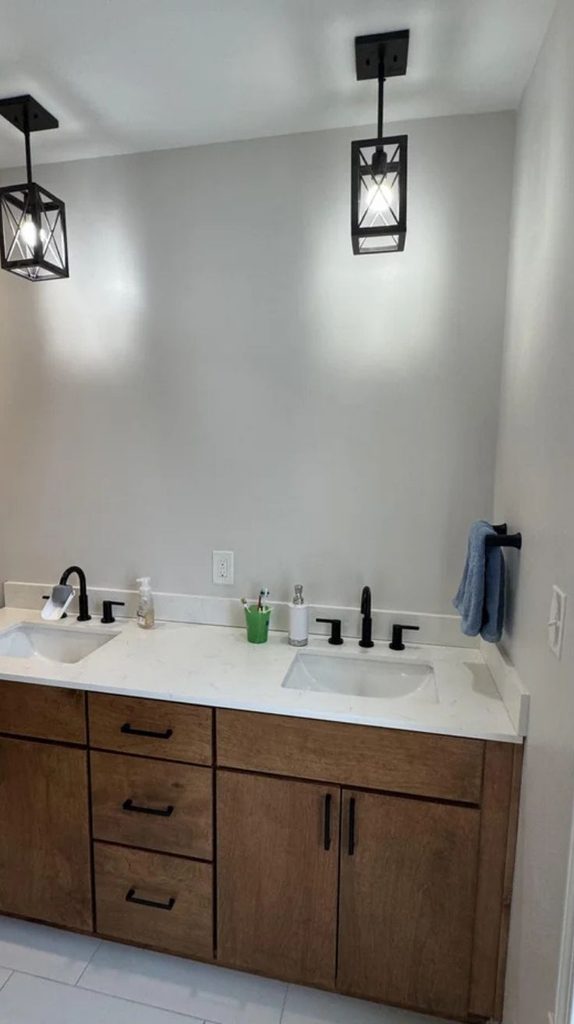
A pendant light can transform an ordinary bathroom into a space with personality. Instead of treating illumination as something purely functional, a decorative pendant introduces shape, texture, and visual interest.
A single pendant can work beautifully above a freestanding bathtub, in a spacious bathroom, or near a vanity where ceiling height allows for an attractive focal point. Glass pendants provide an elegant appearance, while woven or sculptural designs can create a more relaxed atmosphere.
Pendant lighting works especially well in bathrooms inspired by modern farmhouse, coastal, vintage, industrial, or contemporary styles.
The key is proportion. A fixture that is too large can dominate a small room, while a tiny pendant may disappear in a spacious bathroom. The height of the ceiling and location of the fixture should also guide the choice.
Safety remains essential. Decorative fixtures must be suitable for the bathroom environment and installed at a safe distance from water sources. Local electrical codes should always guide placement.
A pendant should also complement the other finishes in the room. For example, a brass fixture can connect with brass faucets, cabinet hardware, or towel bars. Black metal can reinforce black shower frames or vanity details.
This creates visual repetition, making the bathroom feel thoughtfully designed rather than randomly decorated. Sometimes one beautiful fixture is all it takes to turn a practical room into a place that feels special.
Use LED Strip Lighting Under the Vanity
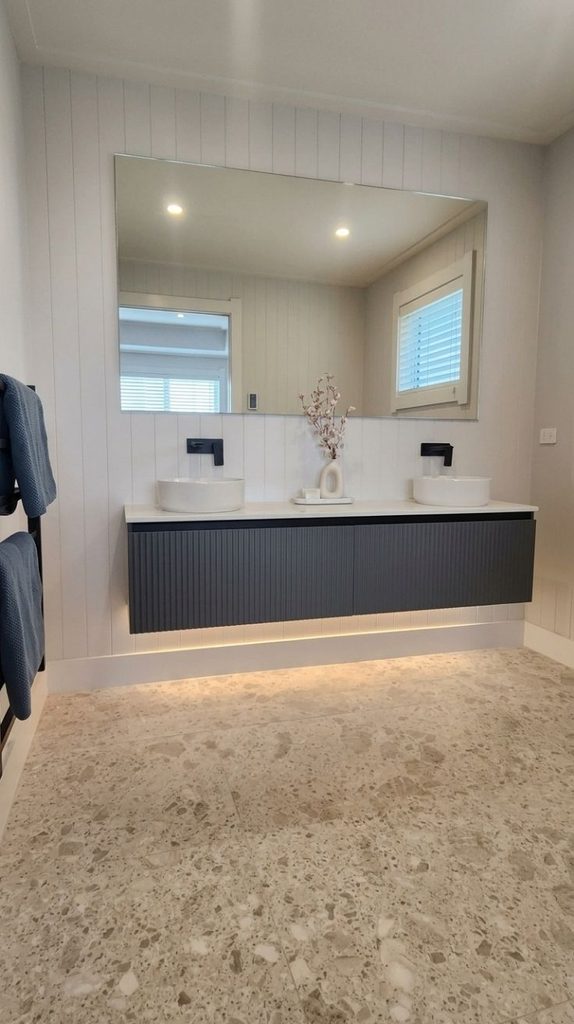
Under-vanity illumination offers a subtle way to add atmosphere without filling the room with intense overhead light. LED strip lighting installed beneath a floating vanity can create a soft glow along the floor.
The effect can be especially beautiful at night. Rather than switching on every bright fixture for a quick bathroom visit, low-level illumination can provide gentle visibility while preserving a calm mood.
Floating vanities are ideal for this approach because the light can shine into the open space underneath. Even a simple vanity can gain a more sophisticated appearance when the base appears to glow.
LED strips are available in different brightness levels and color temperatures. A warm or neutral tone often works well for decorative illumination. If the lighting is intended mainly for nighttime navigation, lower brightness can make the effect more comfortable.
Some systems also offer motion sensors, allowing the light to activate automatically when someone enters the bathroom. This feature can be useful for families and anyone who wants hands-free nighttime illumination.
The installation should be neat, with the LED strip hidden from direct view whenever possible. The goal is to see the glow rather than the individual light points.
Layer Different Types of Illumination
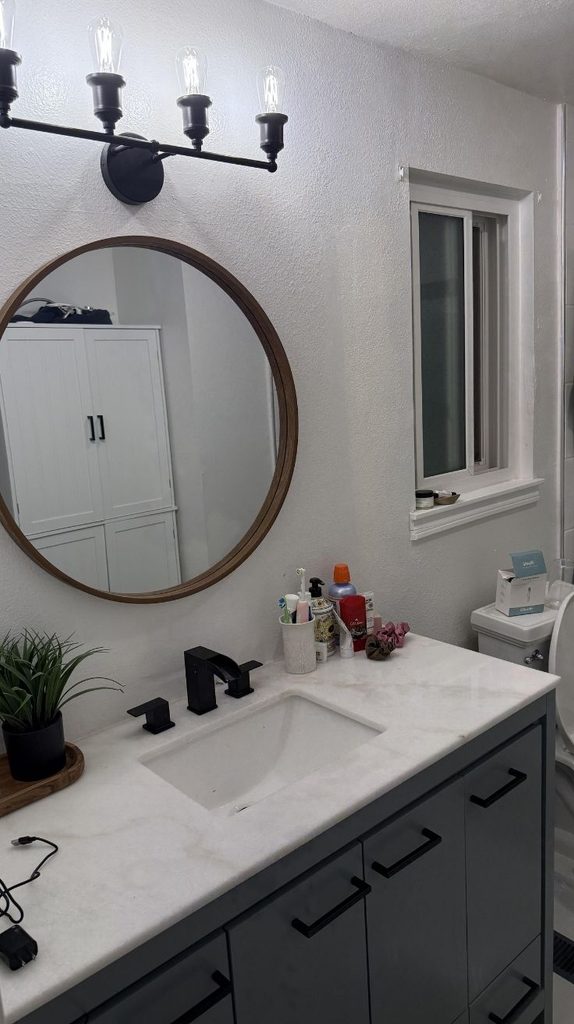
One of the biggest mistakes in bathroom design is relying on a single light source. Layered illumination creates a much more comfortable and flexible environment.
Three main categories can help organize the design: ambient lighting, task lighting, and accent lighting. Ambient lighting provides general brightness throughout the room. Recessed ceiling fixtures, flush-mount lights, and some chandeliers can perform this role.
Task lighting focuses on specific activities. Vanity sconces and illuminated mirrors are excellent examples because they provide concentrated light where grooming takes place.
Accent lighting adds atmosphere and highlights attractive features. LED strips, wall washers, and decorative fixtures can draw attention to tile, artwork, architectural details, or a freestanding bathtub. Combining these layers allows the bathroom to serve different purposes throughout the day.
Bright task lighting may be useful in the morning when getting ready, while softer accent lighting can create a peaceful atmosphere in the evening. The room becomes more flexible because the lighting can change with the situation.
Layering also helps prevent the flat appearance created by a single overhead fixture. Different sources create depth, contrast, and dimension. This approach does not require an expensive renovation. Even a simple bathroom can benefit from combining a ceiling fixture with mirror lighting and one subtle accent source.
Highlight Architectural Features With Accent Lights
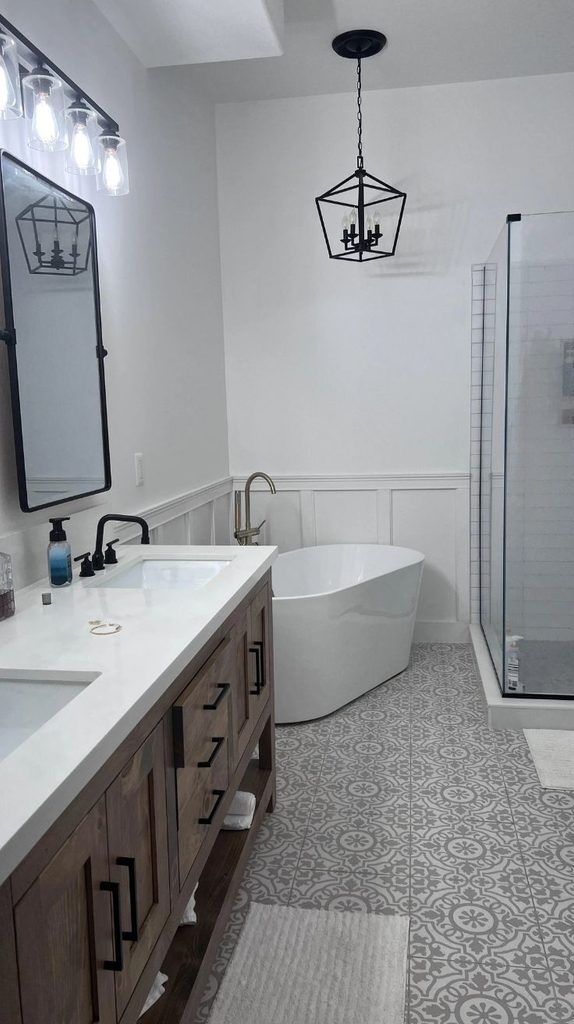
Bathrooms often contain beautiful details that disappear under ordinary lighting. Accent fixtures can bring those features forward and give the room greater visual depth. A textured tile wall, recessed shelf, decorative bathtub, artwork, or unusual architectural feature can become a focal point with carefully directed illumination.
Wall-washing is one useful technique. Instead of aiming a bright beam directly at an object, the light spreads across a larger section of the wall. This can emphasize texture while producing a softer overall effect. Spotlights can also draw attention to individual details. For example, a small directional fixture can highlight a niche filled with decorative bottles, plants, or carefully selected accessories.
Accent lighting works particularly well in bathrooms with natural stone, patterned tile, wood-look surfaces, or three-dimensional wall treatments. Shadows created by the texture can add character without requiring additional decoration.
However, restraint is important. Too many accent lights can make the room feel busy. A few carefully selected areas usually create a stronger effect than illuminating everything equally. The most successful bathroom lighting designs often contain a little mystery. Certain details catch the eye while others remain gently understated.
Bring Soft Light Into a Small Bathroom
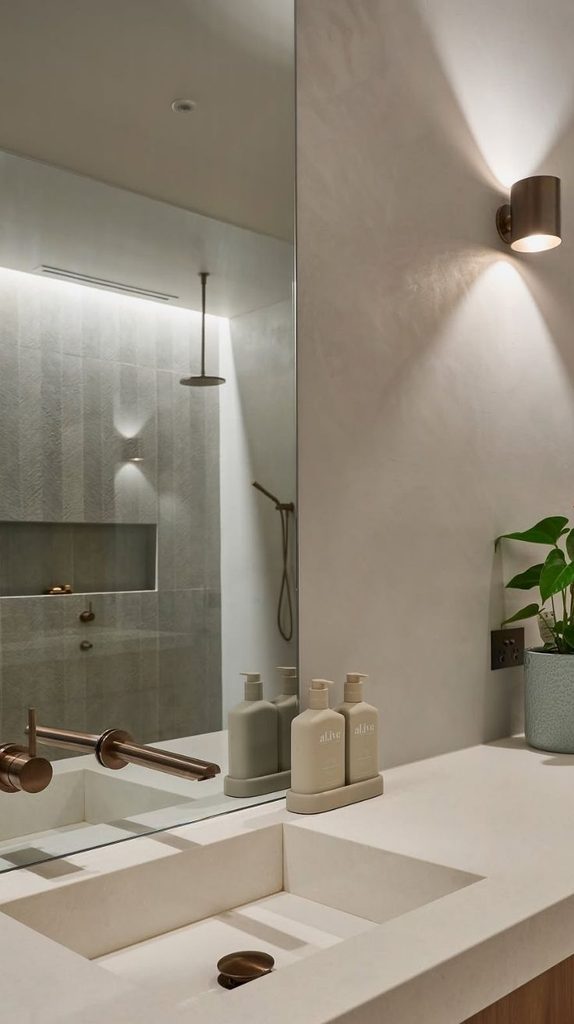
Small bathrooms often present a unique challenge. There may not be enough wall space for large fixtures, and too much brightness can make the room feel harsh rather than spacious. A thoughtful lighting plan can help a compact bathroom feel considerably larger.
Wall-mounted fixtures are useful because they take up less visual space than bulky floor or countertop lamps. A slim vanity light, compact sconces, or an illuminated mirror can provide effective task lighting without crowding the room. Reflective surfaces can also help distribute illumination. Glossy tile, glass shower doors, mirrors, and light-colored walls can bounce light around the space.
A ceiling fixture with a broad distribution pattern can provide general brightness without creating an intense hotspot. Pairing it with mirror illumination creates more depth. The placement of the mirror is especially important. A large mirror can visually expand the room, while suitable lighting around it can make that effect even stronger.
Avoid relying on a single bright bulb positioned directly overhead. It can create deep shadows and make a small room feel less comfortable. Instead, several moderate sources can produce a more balanced result. Small spaces do not need complicated solutions. They need thoughtful ones.
Create a Spa Like Atmosphere With Warm Illumination
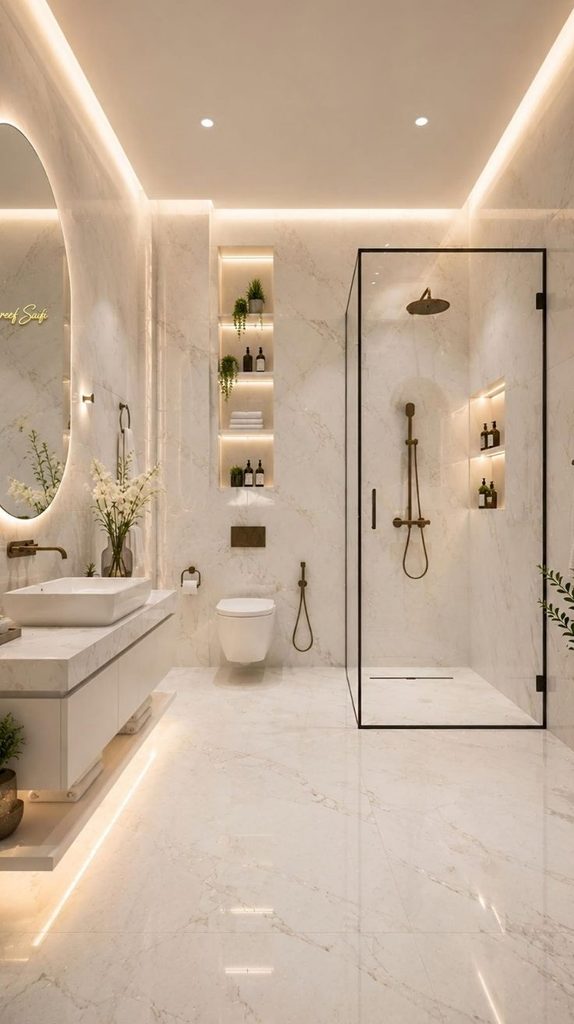
A bathroom can become a peaceful retreat when the lighting supports relaxation. Warm illumination can soften hard surfaces and create a cozy atmosphere, especially in bathrooms with stone, wood tones, cream tile, or natural textures. This approach works beautifully around a bathtub. A decorative wall fixture, dimmable ceiling light, or soft LED accent can create a gentle evening atmosphere.
Warm lighting is particularly useful when the bathroom serves as a place to unwind after a long day. Bright white illumination may be perfect for grooming, but softer light can make a bath or shower feel more relaxing.
Dimmers can provide flexibility. During the morning, stronger illumination can support grooming and cleaning. Later in the evening, lowering the brightness can create a calmer mood.
The color temperature should still remain practical. Extremely warm light may distort colors, which can be inconvenient when applying makeup or choosing clothing. A balanced approach often works best: neutral task lighting near the vanity and warmer accent lighting elsewhere.
- This creates two different experiences in one room.
- One setting says, “Good morning, time to get ready.”
- The other quietly says, “The day is over. Slow down.”
Mix Decorative Fixtures With Practical Lighting
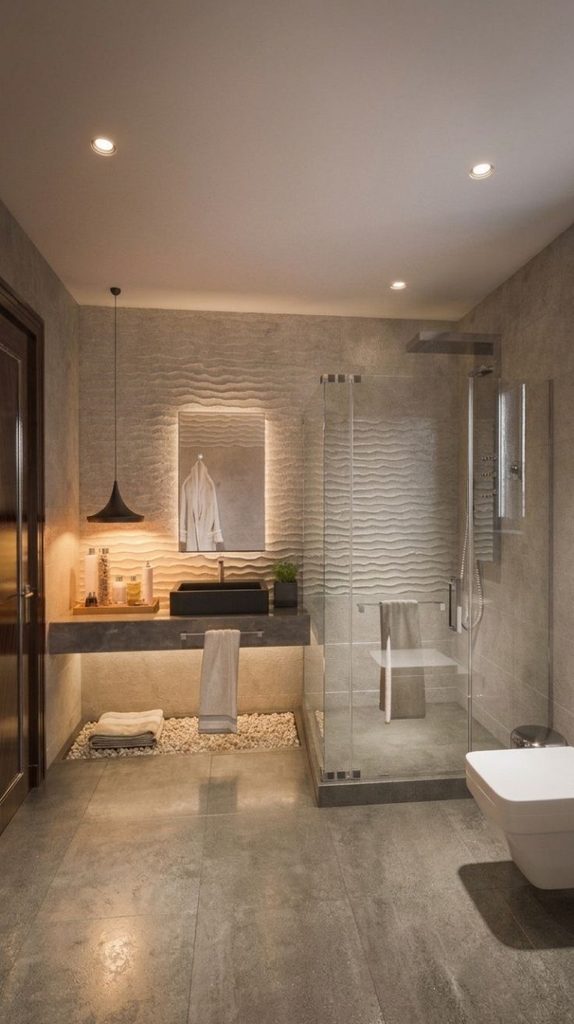
The most attractive bathrooms rarely depend on purely functional fixtures. Decorative lighting can add charm, but practical illumination must still do the hard work. A successful design combines both.
For example, a bathroom might use recessed ceiling fixtures for general illumination, sconces for the vanity, and one decorative pendant as a visual centerpiece. Each source has a clear purpose, yet they work together as one design.
Matching every fixture is not always necessary. Different styles can complement each other when they share a finish, shape, or visual theme.
A bathroom with chrome faucets might feature polished chrome wall sconces. A space with warm brass hardware could use brass or aged-metal decorative lighting. Matte black finishes can connect beautifully with black shower frames, cabinet pulls, and accessories.
Glass is another versatile material. Clear glass can maintain an airy appearance, while opal or frosted glass creates a softer effect. The important thing is balance. Decorative fixtures should enhance the bathroom rather than compete with every other element.
When lighting becomes part of the decor, the room feels more intentional. The fixtures are no longer afterthoughts attached to the ceiling or wall. They become part of the personality of the space. And that is where a basic bathroom can start feeling remarkably sophisticated.
How to Choose the Right Fixtures for Your Space
- Choosing bathroom lighting does not need to feel overwhelming. Start by thinking about what happens in the room.
- A bathroom used mainly for quick morning routines needs strong task lighting around the mirror. A master bathroom designed for long baths may benefit from softer accent illumination and dimmable fixtures.
- Next, consider the size of the room. Large bathrooms can handle multiple fixtures and larger decorative pieces, while compact spaces often benefit from streamlined designs.
- The vanity deserves special attention because it is one of the most important working areas. Lighting should illuminate the face evenly and minimize shadows.
- Then consider the finishes already present. Look at faucets, cabinet hardware, shower fixtures, towel bars, and other metal details. Coordinating finishes can make the room feel cohesive.
- Finally, think about control. Separate switches or dimmers allow different fixtures to perform different jobs. This makes the lighting more useful throughout the day.
- There is no single perfect lighting arrangement for every bathroom. The best design responds to the room, the people using it, and the atmosphere they want to create.
Bathroom Lighting Safety Tips to Keep in Mind
Style should never come before safety.
Bathrooms contain water, moisture, and electrical fixtures, so proper installation matters. Fixtures should have ratings appropriate for their location, especially around showers and bathtubs.
Wet areas require particular attention because direct exposure to water creates greater electrical risk. Always follow local electrical codes and manufacturer instructions.
For permanent electrical installation, working with a qualified electrician is a smart choice. This becomes even more important when installing new wiring, relocating fixtures, adding switches, or working near plumbing.
It is also important to select products specifically designed for bathroom environments when required. A beautiful fixture intended for a dry bedroom may not be appropriate for a damp bathroom.
Safety-rated fixtures can still look stylish. There is no need to sacrifice beauty to create a secure space.

She has nearly 5 years of expertise in organic gardening, plant pests and diseases, landscape design, horticulture, and permaculture. She is a Master Gardener and Horticulturist.
She includes keywords and phrases that raise the content’s search engine ranking because she has a good grasp of SEO best practices.
- Closet Inspo Ideas to Create a Beautiful, Organized, and Stylish Space - October 11, 2026
- Sofa Design Ideas to Transform Your Living Room - October 11, 2026
- Coffee Bar Ideas That Make Any Space Feel Warm and Inviting - October 8, 2026