Backpack Storage Ideas That Keep Your Home Neat and Organized
A backpack has a funny way of becoming the first thing to hit the floor when someone walks through the door. One bag turns into two, then school shoes appear beside them, jackets land on a chair, and suddenly a small entryway feels completely overwhelmed. The good news is that a little creativity can make a huge difference. With the right backpack storage ideas, every bag can have a proper home without making the room feel crowded or overly organized.
The best part is that these solutions don’t require complicated tools, expensive furniture, or advanced technology. A few hooks, shelves, baskets, or clever pieces of furniture can transform an unused wall or forgotten corner into a practical drop zone. Whether the goal is to organize school bags, work backpacks, travel bags, or everyday totes, there are plenty of simple approaches worth trying.
From attractive entryway stations to hidden storage tucked beneath furniture, these ideas can make daily routines smoother. And once the clutter disappears, the whole room can feel calmer. Let’s look at some creative solutions that bring order without sacrificing style.
Create a Dedicated Wall Hook Station
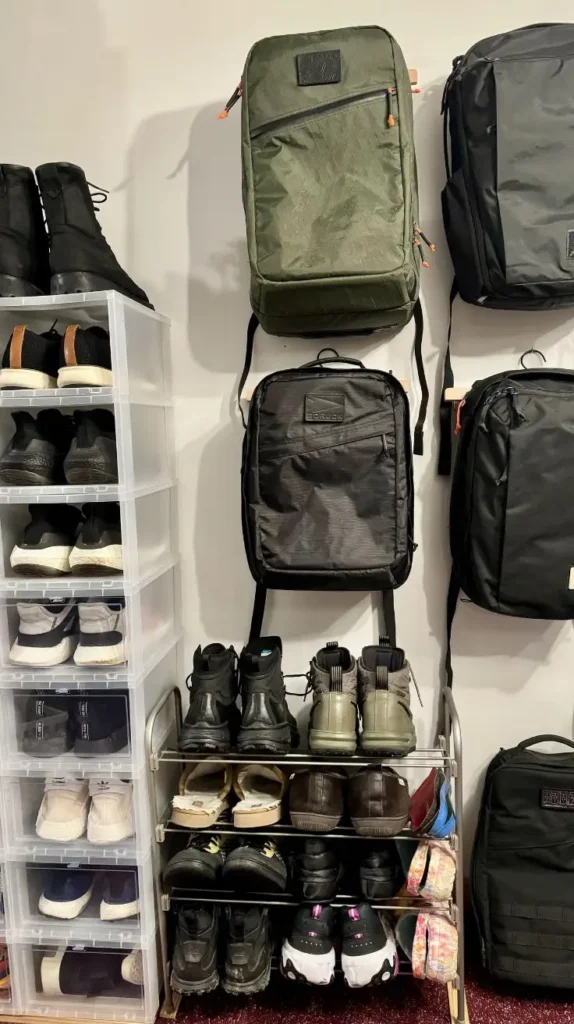
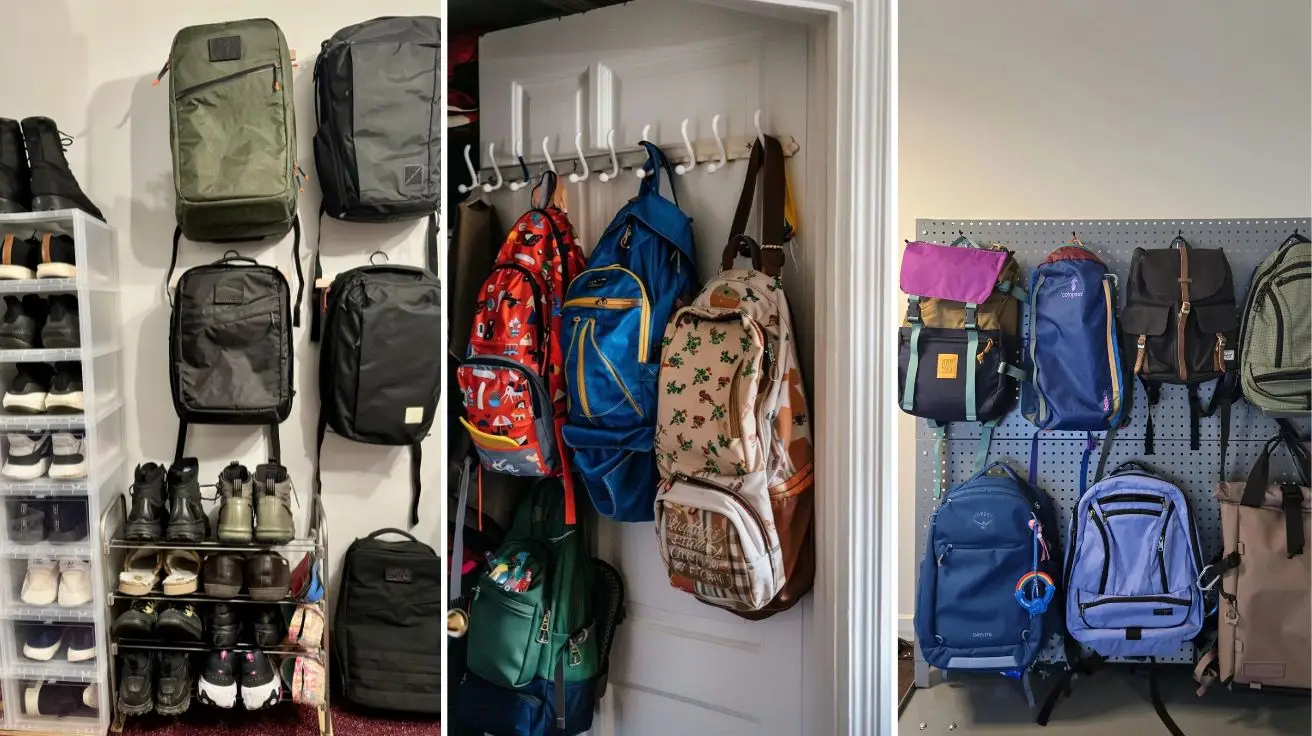
A wall hook station is one of the easiest ways to keep bags off the floor. It works especially well in an entryway, mudroom, hallway, bedroom, or children’s study area where everyone needs quick access to their belongings.
A simple wooden board with several sturdy hooks can become a practical organization station. Each family member can have a designated hook, making it much easier to know where everything belongs. Adding a small shelf above the hooks creates extra room for hats, lunch containers, keys, or small accessories.
For a more decorative appearance, choose hooks that match the existing room design. Black metal works beautifully with modern interiors, while natural wood creates a warm farmhouse or Scandinavian feel. Colorful hooks can bring personality to a children’s room.
The real advantage comes from making the system easy to use. When bags can be hung immediately after coming home, there’s less temptation to toss them onto a chair or floor. That tiny habit can make the entire room feel more organized.
Add Cubbies for a Family-Friendly Drop Zone
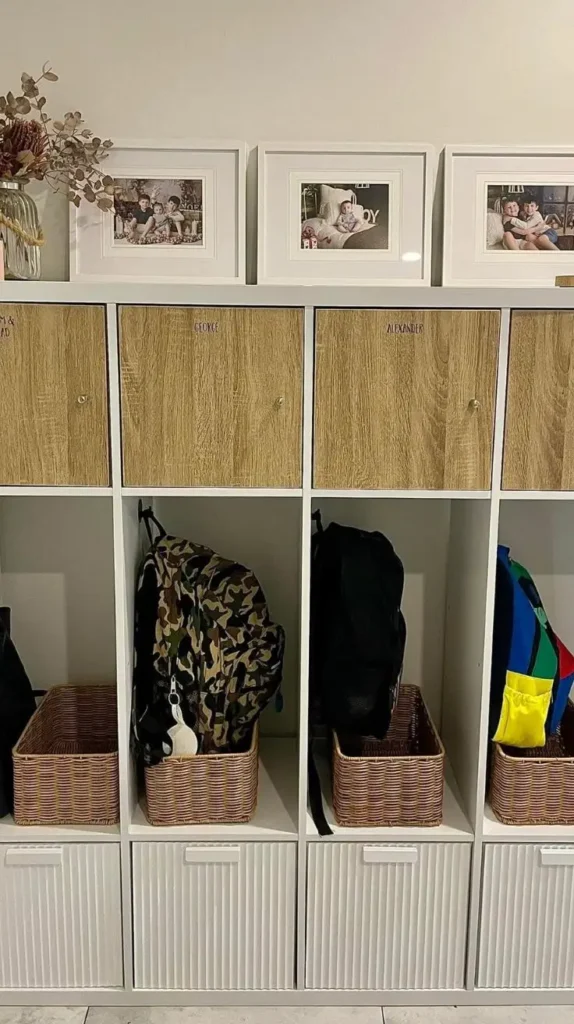
Cubbies are excellent for households where several people need dedicated storage. Instead of piling everything together, each compartment provides a clear place for a backpack and other everyday belongings.
A low cubby unit can sit near the front door, beneath a staircase, or along an empty hallway wall. One compartment can hold a bag, while another stores shoes, sports equipment, books, or reusable shopping bags. Baskets can also slide into the lower sections to hide smaller items.
For families with children, cubbies make cleanup much simpler. Kids don’t need to remember complicated storage systems. They simply walk in, place the bag inside their assigned compartment, and move on.
Labels can make the system even more effective. Name tags, initials, or simple picture labels help younger children identify their space. A cushion placed on top of a sturdy cubby unit can even create a convenient bench for putting on shoes.
Use a Slim Entryway Bench With Storage
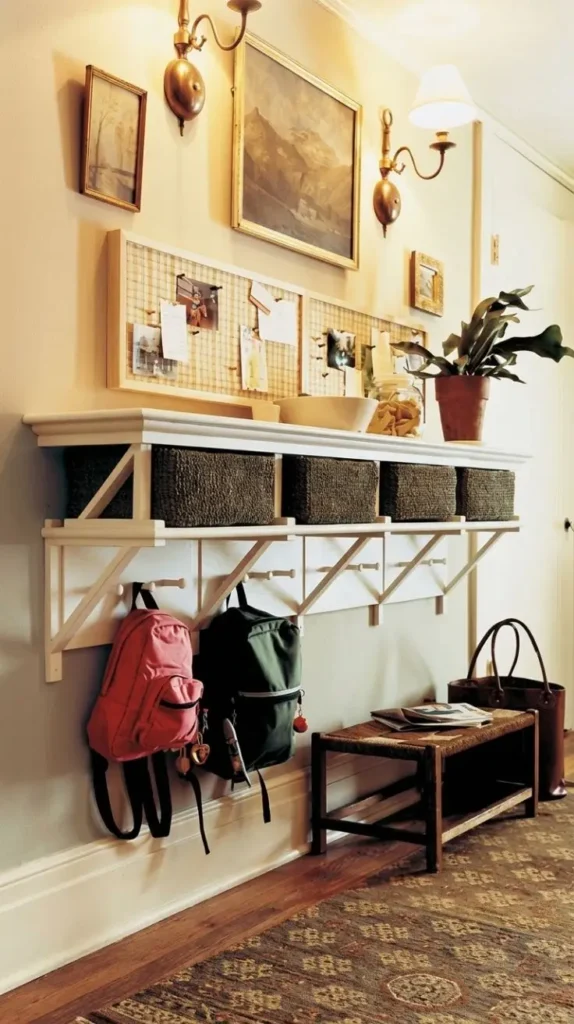
An entryway bench can do far more than provide a place to sit. Choose one with shelves, drawers, or an open compartment underneath, and it becomes a hardworking piece of organization furniture.
The lower section provides a natural location for everyday bags. Shoes can sit nearby, while baskets underneath hold scarves, gloves, umbrellas, or other accessories. This arrangement keeps frequently used belongings concentrated in one area instead of scattered throughout the house.
A narrow bench is particularly useful in small apartments or compact hallways. It provides storage without requiring a large cabinet. A padded seat also adds comfort when putting on or removing shoes. For a cohesive appearance, baskets can be chosen in matching materials such as rattan, canvas, or woven seagrass. This makes the storage look intentional rather than improvised.
A bench also helps define the entryway. Even when the surrounding space is small, one well-designed piece can establish a clear drop zone and prevent the familiar pileup that happens near the door.
Install a Pegboard Organization Wall
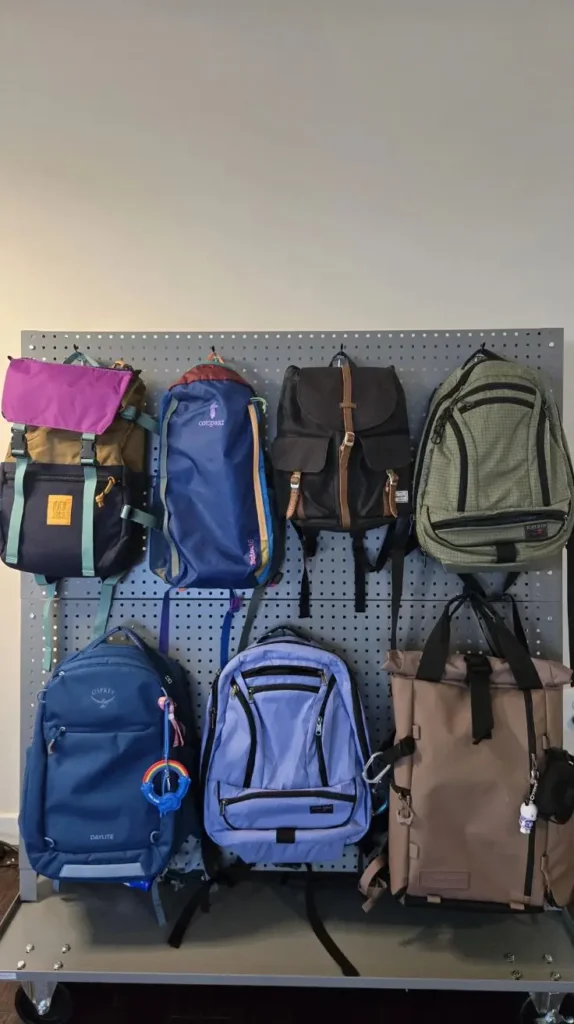
A pegboard can turn an ordinary wall into a flexible storage system. Its greatest advantage is adaptability. Hooks, baskets, shelves, and small holders can be moved around whenever storage needs change.
This makes pegboards especially useful for students, craft rooms, home offices, and children’s bedrooms. A large hook can hold a backpack, while smaller hooks can support headphones, hats, keys, or reusable water bottles.
The design can be kept simple or made into a colorful feature wall. Painting the board to complement the room can help it blend into the decor. Natural wood also creates a relaxed appearance. Another benefit is vertical storage. Instead of using valuable floor space, the wall does the work. That can make a major difference in smaller homes where every square foot matters.
The beauty of this approach is that it can grow with the household. As storage needs change, the arrangement can change too. What begins as a place for one school bag can eventually become a complete organization center.
Turn a Closet Into a Hidden Storage Zone
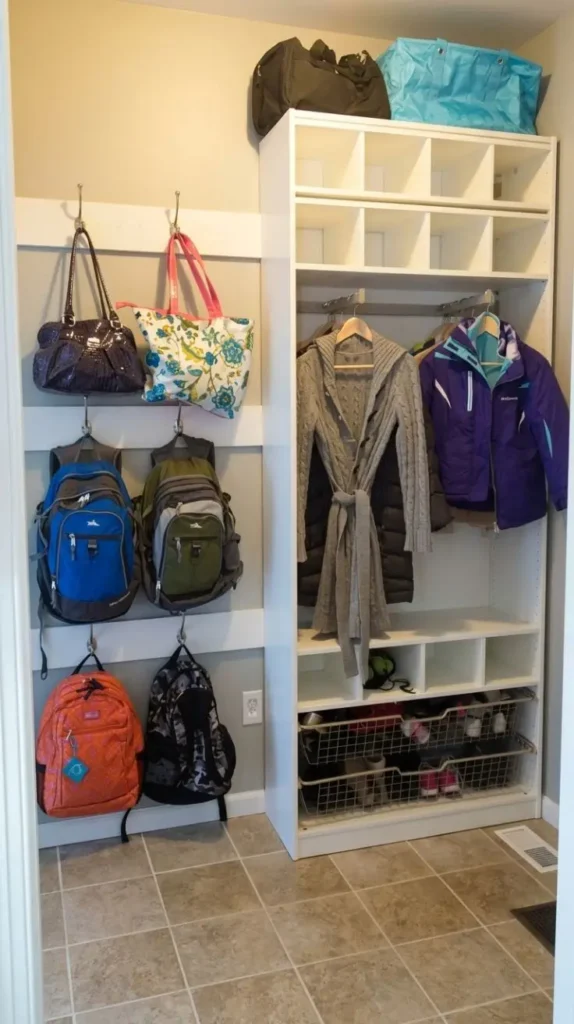
Not every storage solution needs to be visible. A closet can provide an excellent hidden location for bags while keeping living areas looking clean.
An entry closet with unused vertical space can accommodate several hooks along the back wall. A shelf above can store less frequently used bags, while everyday backpacks remain at an easy-to-reach height.
If the closet already contains coats and shoes, a little rearranging can create a dedicated section. Slim hooks mounted inside the door can also take advantage of space that often goes unused. This approach works particularly well for people who prefer a minimal interior. Once the closet door closes, the clutter disappears completely.
A small basket on the closet floor can collect loose accessories such as pencil cases, gloves, or reusable shopping bags. That prevents tiny items from spreading into other rooms. Hidden storage can be especially valuable in an open-plan home. Keeping everyday items behind a door helps maintain a peaceful visual atmosphere even during the busiest part of the day.
Make Use of the Space Under a Staircase
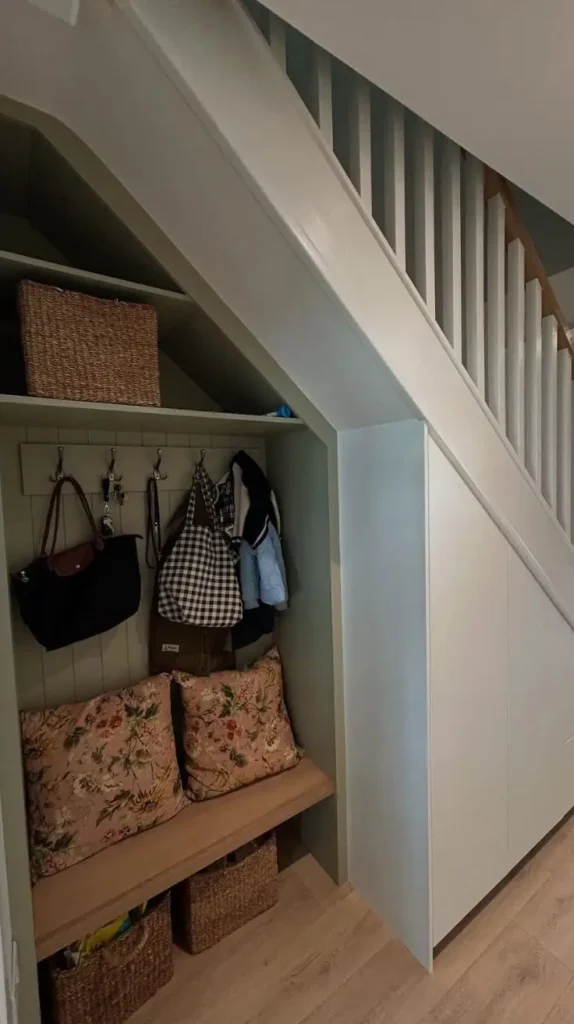
That awkward area beneath a staircase often becomes wasted space. With a little planning, however, it can become one of the most useful storage areas in the home. Hooks can be installed on the wall beneath the stairs for everyday bags. Shelves can provide additional room for shoes, books, helmets, or baskets. If the staircase has enough depth, built-in cabinets can create even more concealed storage.
This solution is especially attractive because it turns an architectural challenge into a practical feature. Instead of trying to hide an empty triangular space, the area becomes part of the home’s organization system.
Open shelves work well when frequently used items need to be easy to grab. Closed cabinets provide a cleaner appearance for households that prefer less visual clutter.
A small bench can also be incorporated into the design, creating a complete drop zone. Suddenly, a forgotten corner becomes a useful station for entering and leaving the house. Sometimes the best storage opportunity isn’t something that needs to be added. It’s already there, waiting to be used.
Hang Bags Behind the Bedroom Door
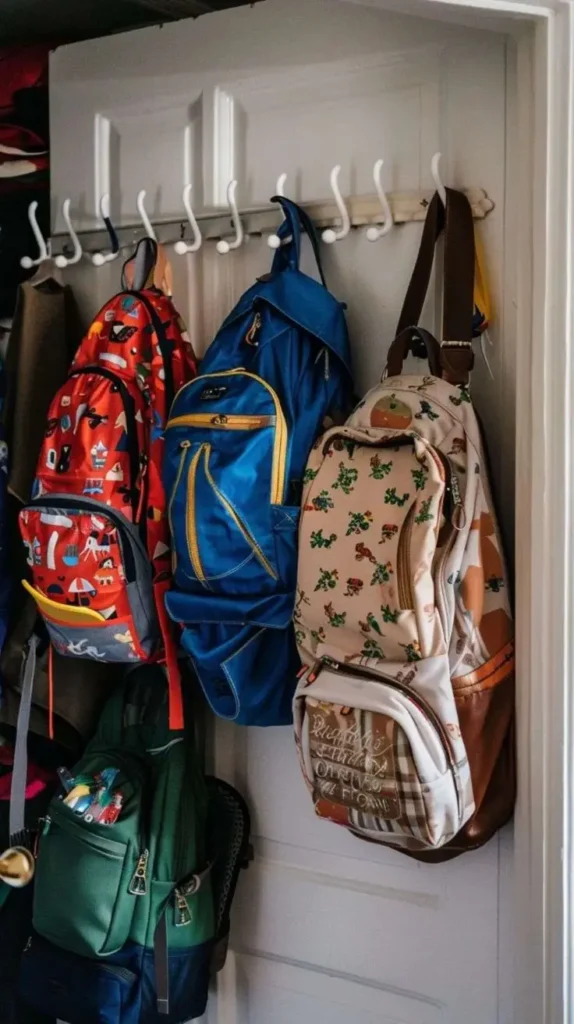
The back of a door provides valuable vertical space that often goes completely unnoticed. An over-the-door organizer or a series of mounted hooks can create instant storage without taking up floor space.
This solution works well for bedrooms, dorm rooms, children’s rooms, and small apartments. Several bags can hang neatly behind the door while remaining within easy reach.
Over-the-door organizers come in many styles. Some include multiple pockets for smaller items, while others feature sturdy hooks designed for heavier belongings. A simple row of hooks can provide a cleaner and more decorative appearance.
Door storage also works well when floor space is limited. Instead of adding another cabinet or shelf, the existing door becomes part of the organization system.
To prevent damage, choose hardware appropriate for the door material and weight of the items being stored. Heavy bags need strong support.
This simple trick can be particularly useful in a small bedroom. When the door closes, the storage almost disappears from view, leaving the rest of the room feeling open.
Build a Stylish Mudroom Storage Wall
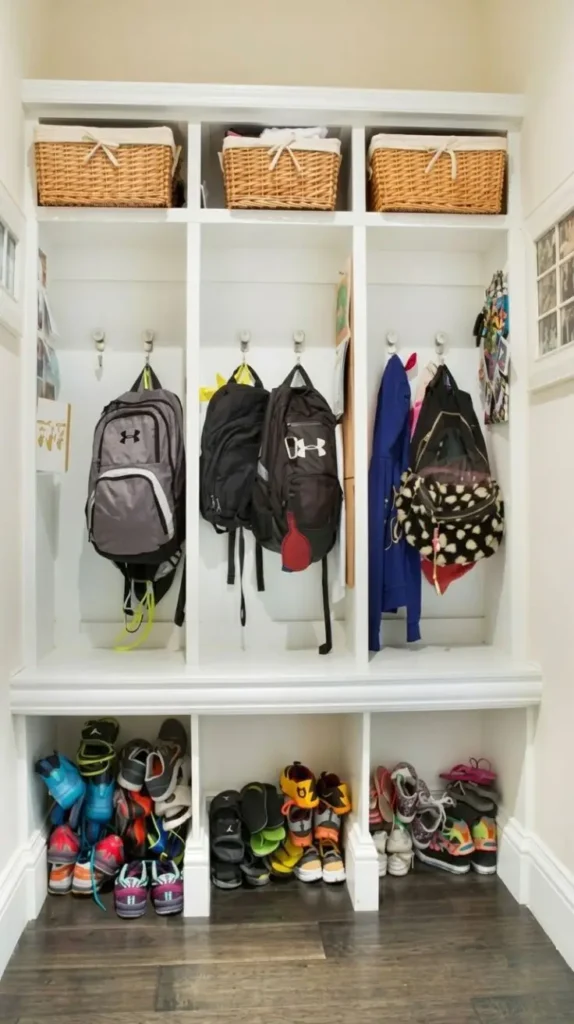
A mudroom doesn’t have to be large to be useful. Even a narrow wall can become a practical station for bags, shoes, coats, and outdoor essentials.
A combination of hooks, shelves, baskets, and a bench creates a complete organization area. Bags can hang at eye level, shoes can remain underneath, and baskets can collect smaller belongings.
Wood paneling or beadboard behind the hooks can give the area a finished appearance. A few decorative touches, such as framed artwork or a small plant, can keep the space from feeling too utilitarian.
For families, assigning one section to each person makes daily routines much easier. Everyone knows where belongings should go, and there is less confusion during busy mornings. The storage wall can also include a small charging shelf for phones and other devices, keeping electronics away from kitchen counters and bedside tables. A well-designed mudroom area does more than store belongings. It creates a transition between outdoor activity and the calm of the home.
Use Rolling Storage for Flexible Organization
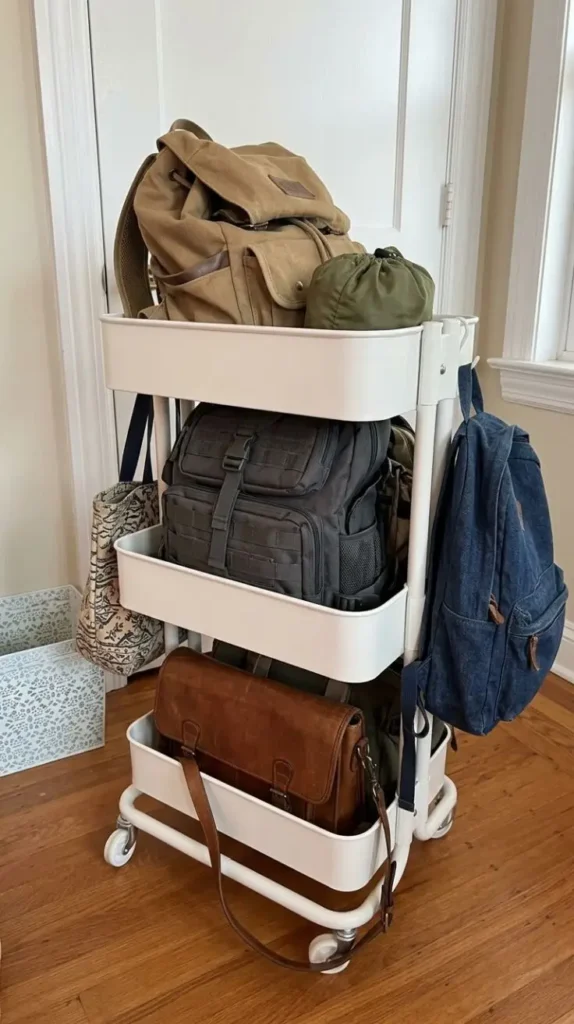
Rolling storage is a smart choice for anyone who likes flexibility. A compact rolling cart or mobile shelving unit can hold bags and move wherever they are needed.
For example, a cart can sit near a desk during the school week and move closer to the entryway on busy mornings. In a bedroom, it can provide temporary storage without requiring permanent wall installation.
Look for a sturdy design with locking wheels if heavier bags will be placed on it. Multiple levels can separate backpacks from books, shoes, accessories, or sports equipment. Rolling furniture can be especially helpful in rental homes where drilling into walls isn’t desirable. It provides useful organization without making permanent changes.
The key is to avoid allowing the cart itself to become a clutter magnet. Assign each level a purpose and keep the arrangement simple. When storage can move with the household, organization becomes much more adaptable. That flexibility can be a lifesaver in homes where rooms serve multiple purposes.
Add a Ladder Shelf for Vertical Storage
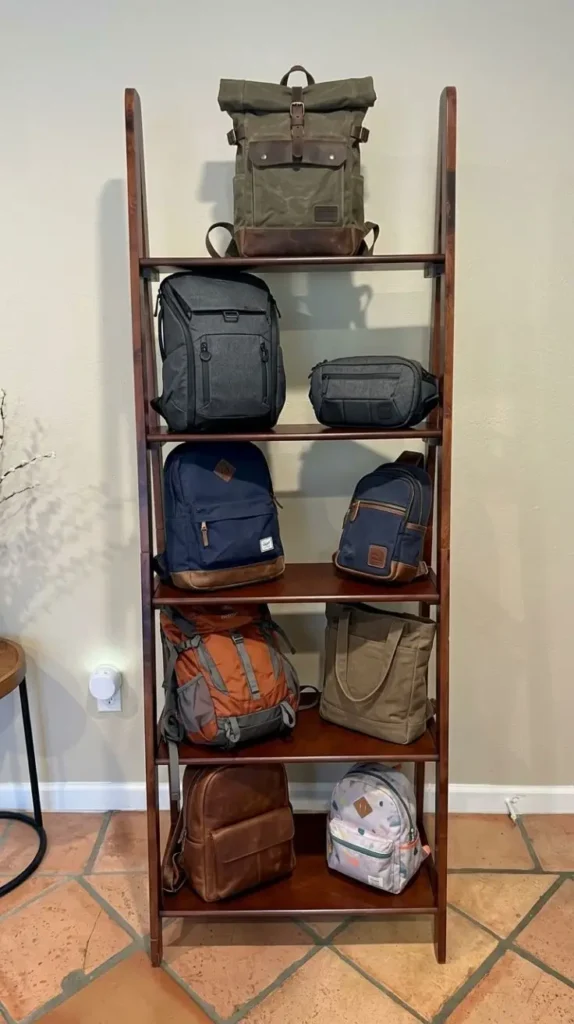
A ladder shelf offers a decorative alternative to traditional hooks and cabinets. Its open shelves provide multiple levels for storing bags while also leaving room for attractive accessories.
A sturdy hook can be attached to one side to hang a backpack, while the shelves hold books, baskets, plants, or decorative objects. This makes the storage piece feel more like furniture than an organization tool.
Ladder shelves work especially well in bedrooms, home offices, and living spaces. Their vertical shape takes advantage of wall height without requiring a wide footprint. For a clean appearance, avoid filling every shelf. Leaving some open space makes the entire arrangement feel lighter.
Natural wood can add warmth to a room, while painted finishes can complement modern interiors. Baskets can hide smaller belongings and maintain a tidy appearance. This is one of those solutions that proves practical storage doesn’t have to look boring. A useful item can also become part of the room’s personality.
How to Choose the Right Storage Solution
- The best approach depends on the size of the room, the number of bags, and how frequently they are used. Before buying anything, take a quick look at where clutter usually collects.
- If bags are constantly dropped near the front door, an entryway station may be the best answer. If floor space is limited, vertical hooks or door-mounted storage can work beautifully. For a large family, cubbies or a mudroom wall may provide better separation.
- Think about accessibility, too. Everyday items should remain within easy reach. Seasonal luggage or rarely used bags can stay higher up or behind closed doors.
- Storage should also match the habits of the people using it. A complicated system may look beautiful but fail if nobody wants to maintain it. Simple solutions often work better because they fit naturally into daily routines.
Keep the Area Organized With Simple Habits
- Even the smartest storage system needs a little maintenance. The easiest approach is to make putting things away part of the daily routine.
- When returning home, bags can immediately go onto their assigned hook, into a cubby, or beneath the entryway bench. Once a week, remove unnecessary papers, empty containers, old receipts, and items that don’t belong.
- It also helps to avoid storing too many bags in one location. If several unused backpacks are taking up valuable space, seasonal or rarely used ones can move to a closet or upper shelf.
- A simple rule works well: every item needs a home. When that home is obvious and convenient, keeping things tidy becomes much easier.

She has nearly 5 years of expertise in organic gardening, plant pests and diseases, landscape design, horticulture, and permaculture. She is a Master Gardener and Horticulturist.
She includes keywords and phrases that raise the content’s search engine ranking because she has a good grasp of SEO best practices.
- Front Porch Swing Ideas to Create a Cozy Outdoor Retreat - October 16, 2026
- Art Deco Living Room Ideas That Bring Glamour, Drama, and Timeless Style - October 15, 2026
- First Home Decor Ideas to Make Your New House Feel Warm, Stylish, and Inviting - October 14, 2026