Indoor Staircase Gardens That Bring Life to Every Step
A staircase can be much more than a simple path between two floors. With the right plants, containers, lighting, and a little creativity, an ordinary stairway can become one of the most charming green corners in a home. Indoor staircase gardens bring softness, color, texture, and natural beauty into spaces that often feel forgotten. Even a narrow staircase can become a beautiful plant display without making the walkway difficult to use.
For anyone who loves houseplants but has limited floor space, the area around the stairs offers an exciting opportunity. Vertical space, landings, railings, walls, and corners can all become part of a living display. The secret is choosing plants that match the available sunlight and arranging them so the staircase remains safe and comfortable.
From cascading vines to compact potted plants, there are countless ways to create a refreshing indoor garden around a staircase. Some designs feel modern and minimal, while others create the cozy atmosphere of a miniature indoor jungle. The best part? A simple staircase transformation can completely change the mood of an entire home.
Create a Cascading Green Display Along the Steps
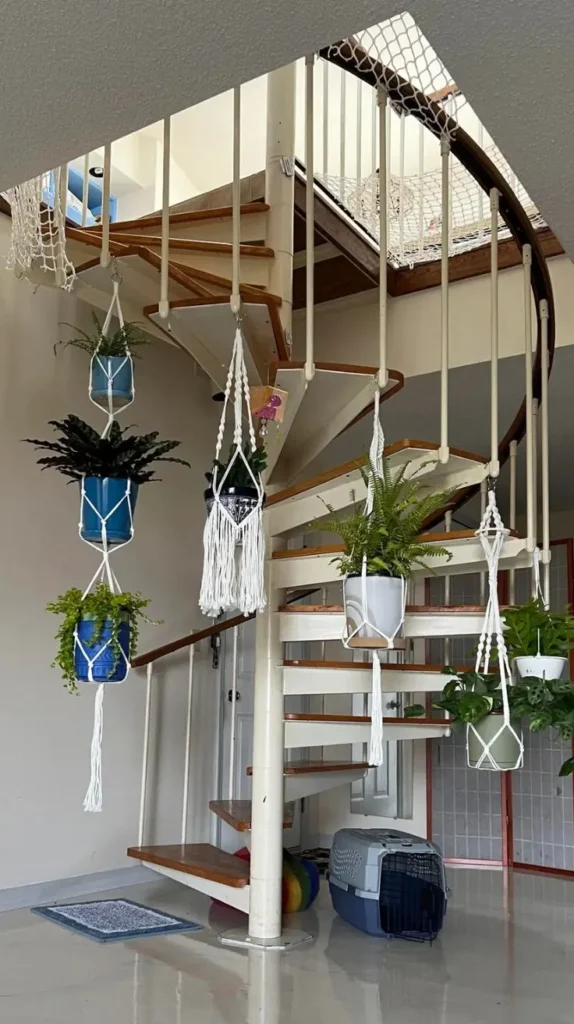
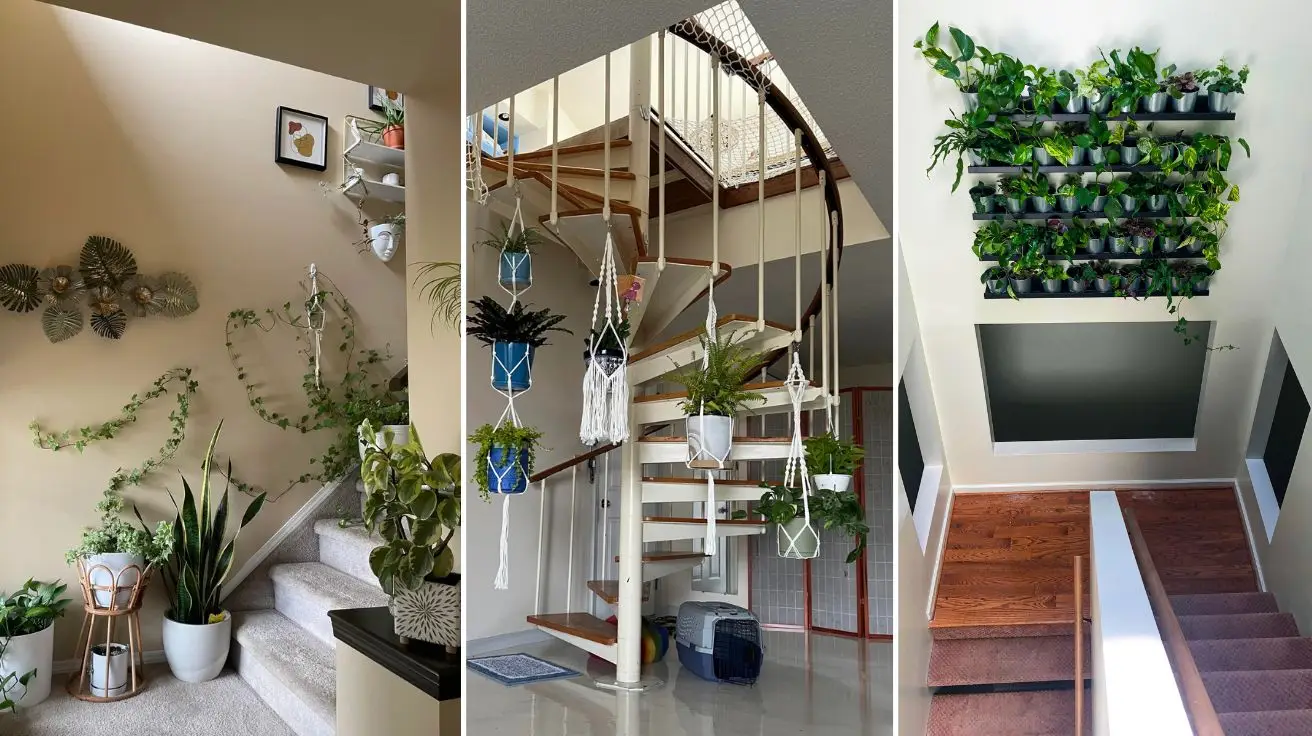
A cascading plant arrangement creates a naturally flowing appearance that works beautifully beside a staircase. Instead of placing identical pots in a straight line, different plants can be positioned at varying heights to create movement. Trailing varieties such as pothos, heartleaf philodendron, string of hearts, and spider plants can spill gently over shelves or raised plant stands.
This approach works especially well when the staircase has an open side or a wide landing. Larger plants can occupy the lower sections, while smaller containers sit higher up. The leaves gradually connect the different levels, making the entire area feel like one cohesive garden.
When arranging plants near stairs, safety should always come first. Containers should remain away from the walking path and should have stable bases. Heavy pots are better suited to stationary corners, while lightweight containers can work well on sturdy shelves.
A mixture of leaf shapes makes the display even more interesting. Broad green leaves can be combined with delicate trailing stems for contrast. Adding a decorative planter or two can also introduce texture without overwhelming the natural look.
Turn the Stair Landing Into a Mini Plant Corner
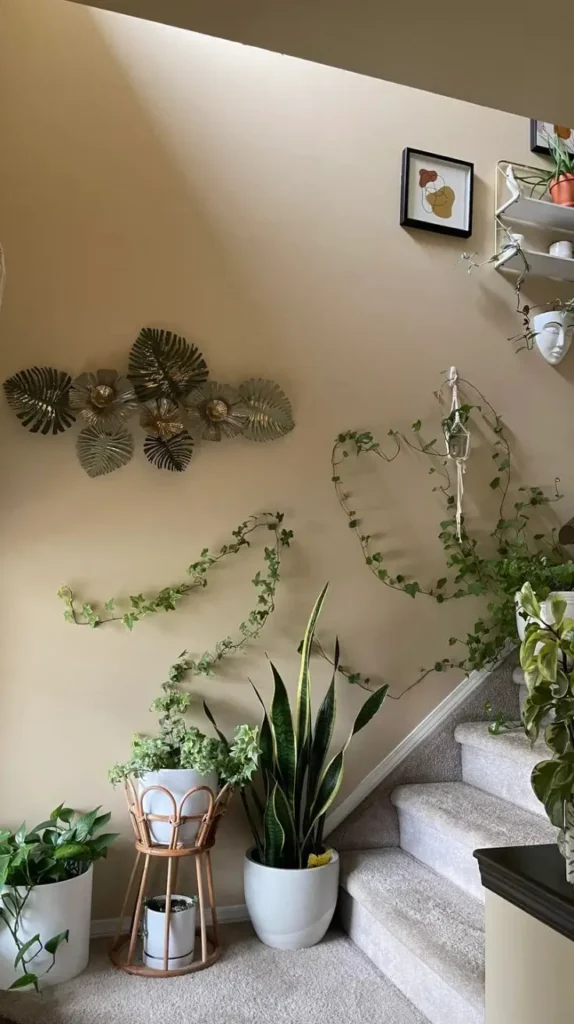
A staircase landing is often an overlooked area, yet it can become the perfect location for an indoor garden. A small console table, plant stand, or narrow shelf can transform an empty landing into a peaceful green retreat.
The key is to choose plants according to the amount of natural light available. A bright landing may support plants such as snake plants, rubber plants, peace lilies, or fiddle leaf figs. A darker location may work better with low-light houseplants such as ZZ plants, pothos, cast iron plants, or certain varieties of philodendron.
Different heights help create a layered appearance. A tall plant can anchor one side, while medium-sized pots fill the center and smaller plants add detail around the base. This arrangement creates depth without requiring a huge amount of space.
Decorative baskets can hide ordinary nursery pots and introduce warmth. Ceramic planters can provide a cleaner contemporary appearance, while terracotta containers create a more earthy feeling.
A small plant corner can also become a visual transition between rooms. When someone walks upstairs, the greenery immediately creates a softer atmosphere. It turns an ordinary landing into a place that feels intentional rather than simply functional.
Use Wall-Mounted Planters for a Vertical Garden
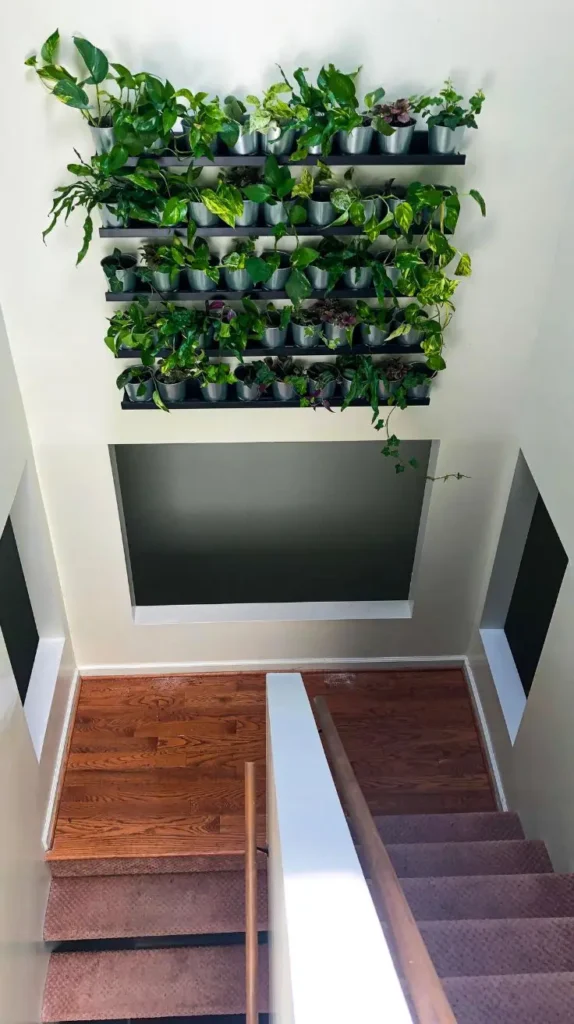
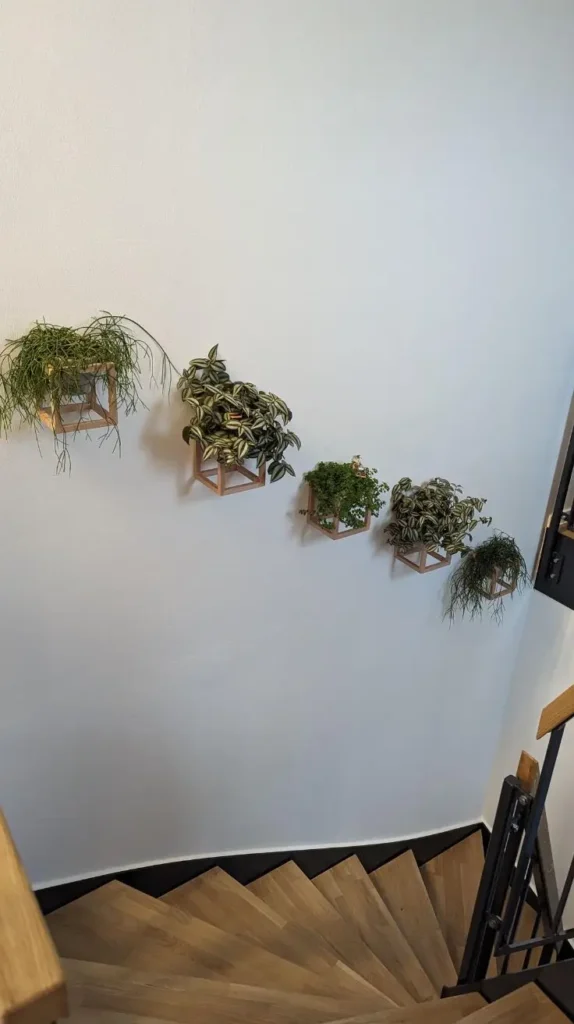
When floor space is limited, the walls beside a staircase can become the star of the design. Wall-mounted planters provide a practical way to create a vertical garden while keeping the stairs and floor clear.
Several small planters can be arranged in a geometric pattern. Alternatively, staggered containers can create a more relaxed and organic appearance. The choice depends on the style of the home. Trailing plants are particularly effective because their stems gradually grow downward. Pothos, philodendron, tradescantia, and spider plants can create attractive green curtains against a plain wall.
For a more contemporary look, simple white, black, or neutral planters can be arranged against a clean wall. Wooden plant holders and woven containers provide a warmer appearance for rustic or bohemian interiors.
Before installing anything, the wall should be checked for suitable support. Watering can also create problems if containers leak, so moisture-resistant materials and protective trays are helpful.
A vertical plant display does more than add greenery. It can become a decorative feature that fills an otherwise empty wall. Suddenly, the staircase no longer looks like a forgotten passageway. It becomes part of the home’s overall interior design.
Build a Small Indoor Jungle Beside an Open Staircase
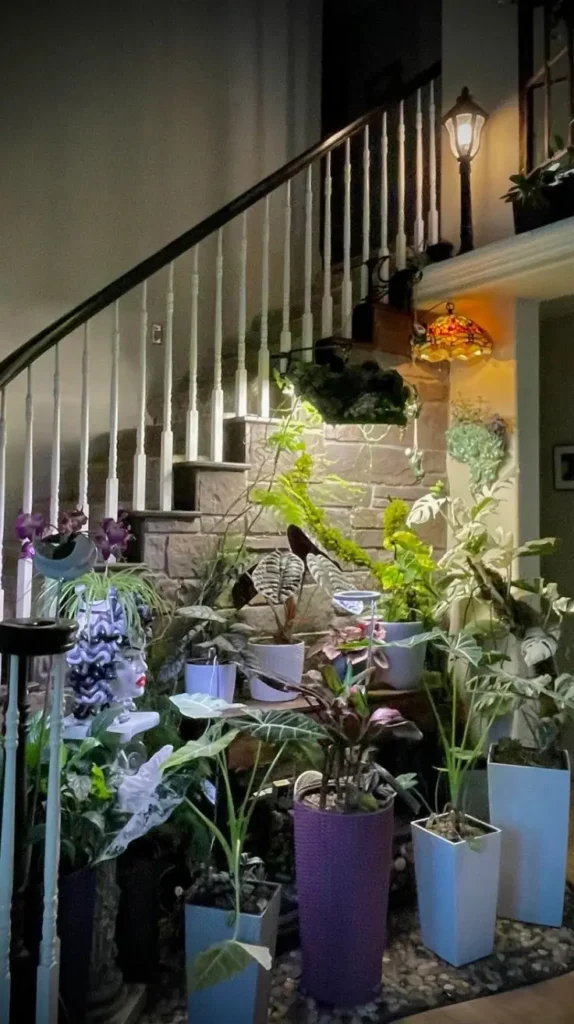
An open staircase creates an especially exciting opportunity for a lush plant arrangement. The empty space beneath or beside the stairs can become a compact indoor jungle filled with different layers of foliage.
Start with one or two larger plants as anchor pieces. Monstera deliciosa, bird of paradise, rubber plants, and large dracaena varieties can provide height and structure. Smaller plants can then fill the surrounding areas.
For an authentic jungle-inspired appearance, variety matters. Combine plants with large leaves, narrow leaves, trailing stems, and upright growth habits. Different textures make the display feel richer and more natural.
However, a jungle look doesn’t mean every available space needs a plant. Leaving some open areas prevents the arrangement from becoming visually crowded. It also makes maintenance easier.
Decorative stones, natural baskets, wooden stands, and simple plant supports can add additional character. A warm floor lamp nearby can make the foliage stand out during the evening.
This style works particularly well in homes with an open floor plan. The greenery can visually connect the lower and upper levels while adding warmth to the architecture.
With thoughtful placement, even a small collection of plants can create the feeling of stepping into a lush retreat every time the stairs are used.
Add Slim Shelving for a Space-Saving Display
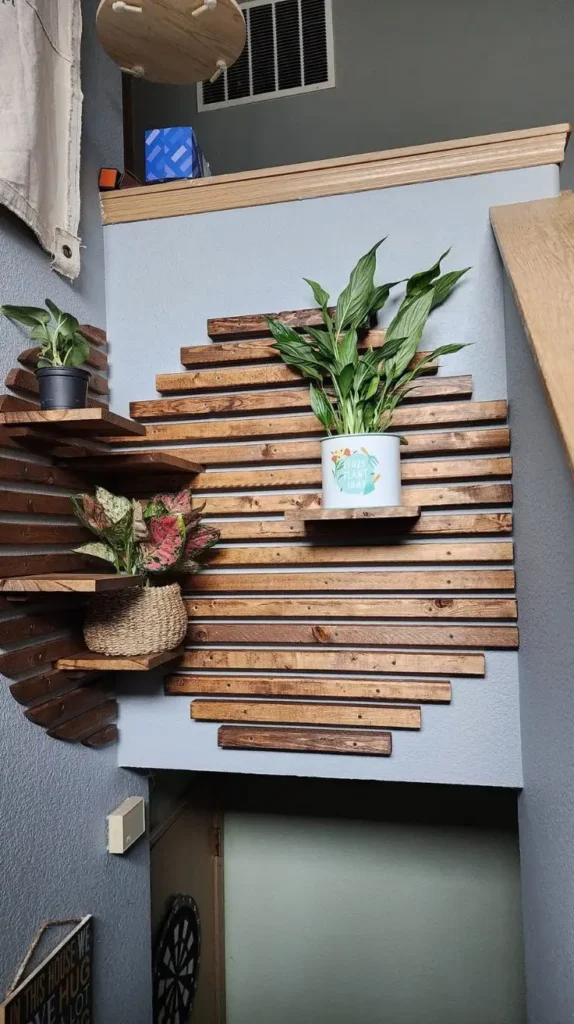
Not every staircase has enough floor space for large containers. Slim shelving provides a clever alternative. Narrow shelves can hold small houseplants without taking up much room. This approach is particularly useful along wide stair walls or on landings. Floating shelves can display small pots, while tiered shelving can create several levels of greenery.
Compact plants such as peperomia, baby rubber plants, small ferns, pilea, and miniature succulents can work well. Trailing plants can be positioned near the edge so their stems naturally hang downward.
Shelving also allows decorative elements to be mixed with plants. Small artwork, framed photographs, candles, books, and natural wood accessories can sit alongside the greenery. The arrangement should still have breathing room. Too many objects can make the staircase feel cluttered, especially in a narrow home.
One useful trick is to vary the spacing between containers rather than creating perfectly equal gaps. A slightly irregular arrangement often feels more relaxed and organic. This type of indoor garden proves that limited square footage doesn’t have to limit creativity. A few inches of wall space can become a surprisingly attractive plant display.
Create a Modern Stairway With Minimal Greenery
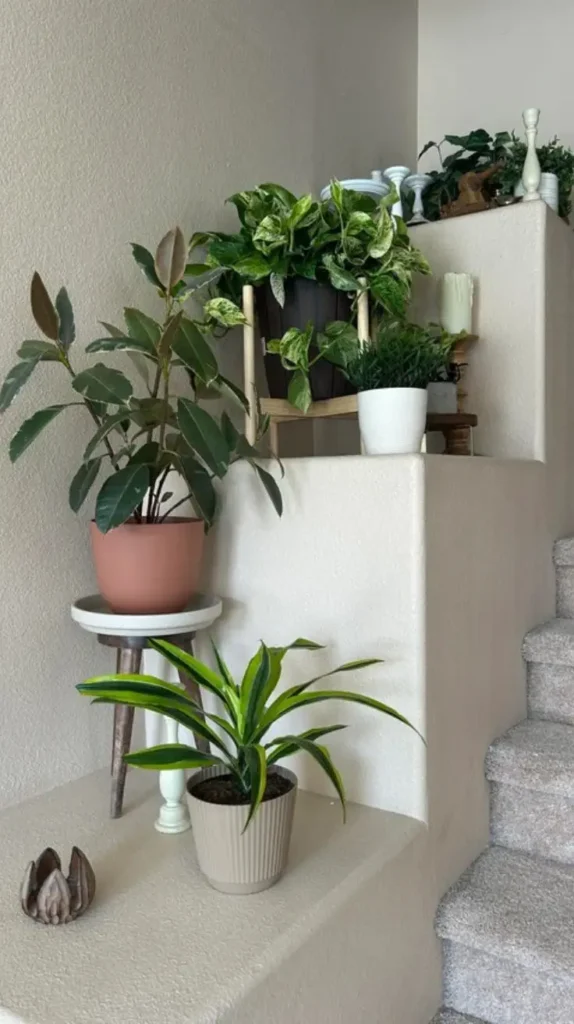
Not every plant lover wants a dense indoor jungle. A minimalist staircase garden can feel elegant, peaceful, and sophisticated with just a few carefully selected plants.
Instead of filling every corner, choose several statement plants and give each one enough space to stand out. A tall snake plant beside the landing, a sculptural ZZ plant near the wall, or a single rubber plant in a simple planter can make a strong visual statement.
Neutral containers work especially well in minimalist interiors. White ceramic, matte black, concrete, or natural stone planters can complement modern stair materials such as glass, metal, and hardwood.
The greenery becomes part of the architecture rather than competing with it. Simple maintenance also makes this approach attractive. Fewer plants mean less watering, pruning, cleaning, and repositioning.
Lighting plays an important role too. Soft wall lighting can highlight leaves and create interesting shadows along the staircase after sunset. The beauty of minimalism comes from restraint. A handful of healthy plants can have more impact than dozens of poorly arranged containers.
For homeowners who prefer clean lines and uncluttered rooms, this style creates a refreshing connection with nature without changing the overall character of the interior.
Decorate the Stair Rail With Trailing Plants
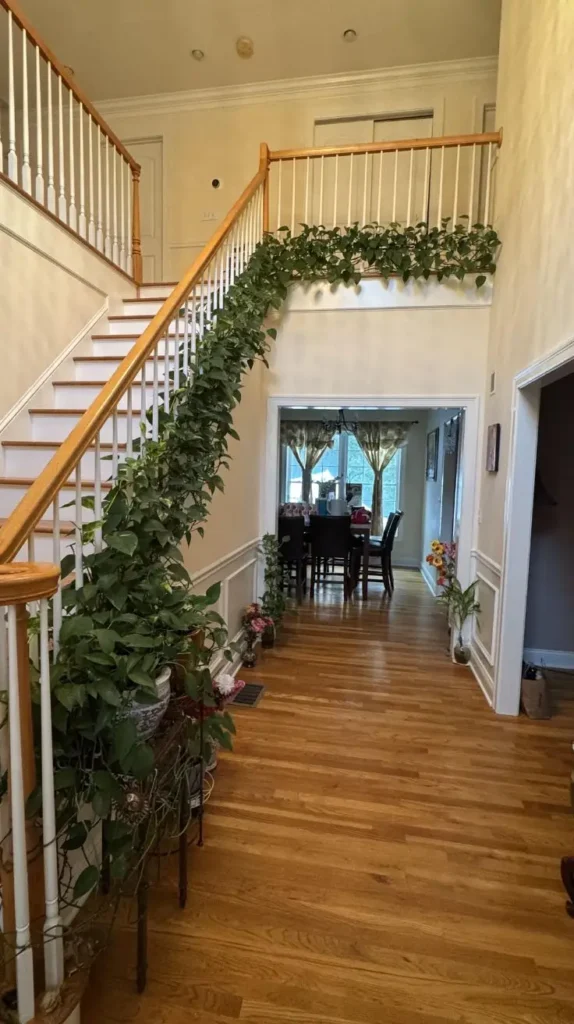
A staircase railing can become another opportunity for greenery, especially when the design includes a wide ledge or a secure area for small planters. Trailing plants can be placed near the railing so their foliage gently follows the staircase. This creates a sense of movement because the plants visually travel from one level to another.
English ivy, pothos, string plants, and heartleaf philodendron can provide attractive cascading growth when the growing conditions are suitable. Care is important here. Plants and containers should never interfere with hand placement or create an obstacle along the railing. Any hanging planter must be firmly secured.
A safer approach is to place plants on nearby ledges rather than attaching containers directly to the handrail. The effect can still be stunning. Green stems and leaves can soften hard architectural lines and make metal, glass, or wooden railings feel warmer.
This idea is especially effective in contemporary homes where the staircase may otherwise look somewhat stark. A little foliage introduces organic texture without requiring a major renovation. As the plants mature, their trailing stems can become one of the most recognizable features of the home’s interior.
Combine Plants With Natural Wood Elements
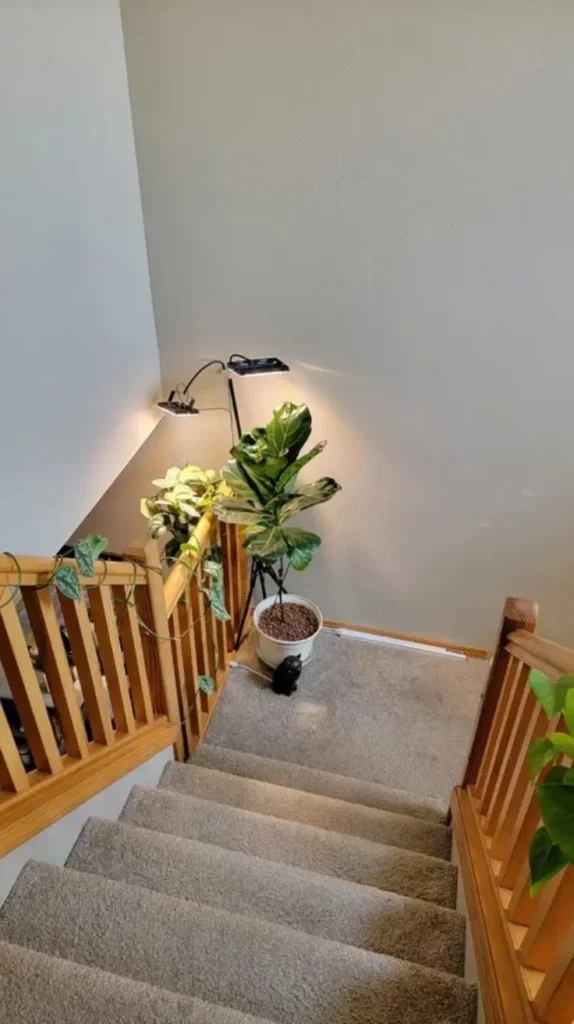
Wood and greenery create a timeless combination. Adding wooden shelves, plant stands, ladder-style displays, or woven baskets can make an indoor staircase feel warm and welcoming.
A wooden plant ladder can be placed near a landing, provided it does not block the walking route. Each level can hold plants of different sizes. The vertical structure uses height efficiently while adding visual interest.
For a farmhouse-inspired interior, terracotta pots and woven baskets can complement natural wood beautifully. A Scandinavian-style room may look better with pale wood and simple ceramic containers.
The plants themselves don’t need to be complicated. Snake plants, pothos, spider plants, and philodendrons can provide plenty of greenery. Natural materials also help prevent a plant display from looking overly artificial. Wood introduces warmth, while foliage adds softness.
This combination can make a staircase feel connected to the rest of the home. Rather than treating plants as separate decorations, the arrangement becomes part of the interior design. A few carefully selected materials can create an inviting atmosphere that feels comfortable in every season.
Design a Bright Herb and Edible Plant Area
A staircase near a bright kitchen or sunny window can potentially support a small collection of edible plants. Fresh herbs can bring both beauty and usefulness into an indoor space.
Basil, mint, parsley, thyme, oregano, chives, and rosemary can grow successfully indoors when they receive suitable light and care. Small containers can sit on a nearby shelf or sunny landing, away from the walking area.
This arrangement works particularly well for people who enjoy cooking. Fresh herbs are easy to access, and the greenery adds a pleasant natural touch. Good drainage is essential. Herb containers should have drainage holes, and water should never be allowed to collect where it could damage flooring or create a slipping hazard.
Grow lights may help if natural sunlight isn’t sufficient, although their use depends on the specific plants and location. Labels can add a charming decorative detail. Simple wooden or ceramic plant markers make it easy to identify each herb.
The combination of edible plants and decorative greenery gives the staircase a practical purpose. It becomes a small growing station rather than simply another area filled with houseplants. And there is something especially satisfying about walking downstairs and picking fresh herbs for breakfast or dinner.
Create a Peaceful Green Retreat Under the Stairs
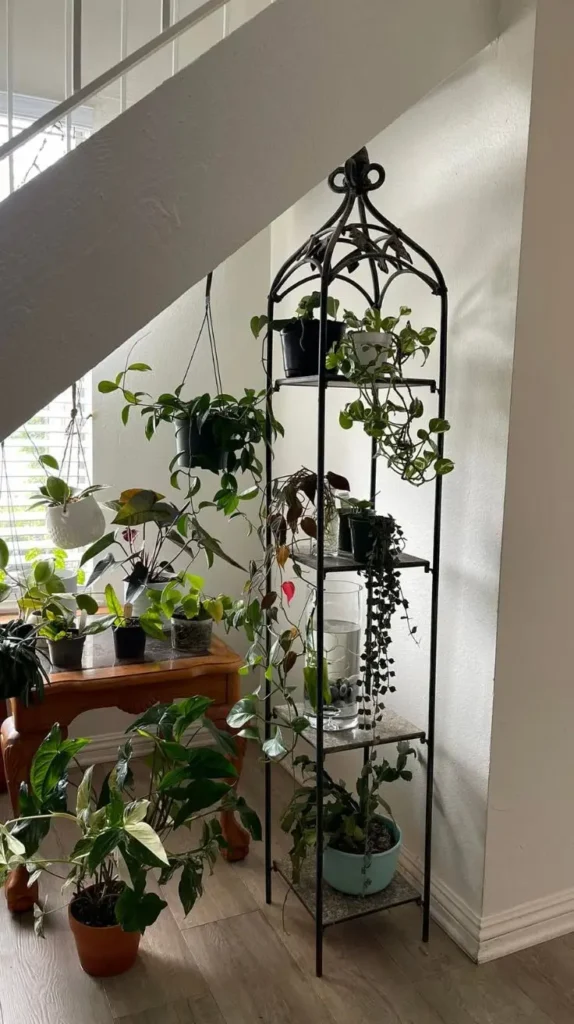
The space underneath a staircase is often awkward, dark, and difficult to decorate. Yet with thoughtful planning, it can become one of the most beautiful green spaces in the home.
Low-growing plants are ideal for this location because they don’t compete with the ceiling height. Snake plants, ZZ plants, ferns, pothos, peace lilies, and other suitable indoor varieties can create layers of foliage. A narrow plant stand can provide height, while smaller containers fill the lower sections. Decorative stones or a natural fiber rug can help define the area.
Lighting is particularly important beneath stairs. If natural light is limited, suitable artificial plant lighting may help certain species thrive. Otherwise, choose plants that tolerate lower-light environments.
The space can also include a small bench, stool, or decorative object if room allows. This can transform the area from unused storage space into a peaceful corner. The darker environment beneath the staircase can actually make green foliage stand out beautifully when paired with warm decorative lighting. What once looked like dead space can become a quiet botanical feature that adds personality to the entire home.
How to Choose the Best Plants for the Space
- Successful indoor gardening begins with choosing plants that match the environment rather than selecting plants based only on appearance.
- Start by checking how much natural light reaches the staircase during the day. Bright indirect light suits many popular houseplants, while low-light areas require more tolerant varieties.
- Humidity matters too. Some tropical plants appreciate humid conditions, while others prefer drier environments. Temperature should also remain reasonably stable.
- Growth habits are another important consideration. Upright plants work well in corners, compact varieties suit shelves, and trailing plants can add movement to elevated displays.
- Consider maintenance as well. Busy homeowners may prefer drought-tolerant plants such as snake plants and ZZ plants. People who enjoy frequent gardening may appreciate plants that require regular pruning and attention.
- Always consider the mature size of each plant. A small nursery plant can grow dramatically over time. Leaving enough space around it prevents future crowding.
Safety Tips for a Stairway Plant Display
- Beauty should never come at the expense of safety. Staircases require clear walking areas, secure handrails, and stable surfaces.
- Keep pots away from stair treads whenever possible. Never allow leaves, vines, cords, or containers to create trip hazards.
- Use stable plant stands and secure wall-mounted planters properly. Heavy containers should sit on surfaces strong enough to support their weight.
- Water carefully. Spilled water can make stairs and floors slippery and may damage wood flooring. Drainage trays can help prevent unwanted moisture.
- Regular pruning also matters. Fast-growing vines should be trimmed before they spread into walking areas.
- Pet owners and families with young children should also check whether selected plants are appropriate for their household.
- A beautiful staircase garden should make the home feel more comfortable, not create another daily worry.
Lighting Ideas for a Greener Staircase
- Lighting can dramatically change how plants appear after sunset. Warm wall sconces, recessed lights, pendant fixtures, and carefully positioned lamps can highlight foliage and architectural details.
- Natural light should always be considered first. Observe the staircase at different times of day before deciding where each plant belongs.
- If sunlight is weak, plants may need supplemental lighting depending on their individual requirements. A grow light can provide additional support for plants that require more light than the room naturally receives.
- Decorative lighting can also create atmosphere even when it doesn’t function as plant lighting. A softly illuminated staircase filled with greenery can feel calm and inviting in the evening.
- Avoid harsh lighting that creates excessive glare. Gentle illumination usually works better for creating a relaxing indoor environment.
Easy Maintenance Tips
- Indoor plants near stairs can stay attractive with a simple routine. Check the soil before watering instead of automatically watering every plant on the same schedule.
- Remove yellow or damaged leaves regularly. Dust can also collect on broad leaves, reducing their appearance and potentially affecting plant health. A soft, damp cloth can gently clean suitable leaves.
- Rotate containers occasionally when appropriate so plants receive more even light.
- Watch for pests such as spider mites, mealybugs, and fungus gnats. Early detection makes problems much easier to manage.
- Most importantly, avoid overcrowding. Giving plants enough room improves airflow and makes watering, pruning, and cleaning much easier.
Final Thoughts
A staircase doesn’t have to remain an ordinary architectural feature. With thoughtful plant selection and creative placement, it can become a beautiful connection between different areas of the home.
From cascading vines and wall-mounted planters to minimalist displays and lush under-stair arrangements, these indoor staircase gardens offer plenty of ways to bring nature indoors. The right approach depends on the available light, staircase layout, home style, and amount of maintenance that feels comfortable.
Start small. A single attractive plant on a landing can make a surprising difference. Add a shelf, introduce a trailing vine, or build a layered display over time. There is no need to transform the entire staircase in one weekend.
The most beautiful results often grow gradually. As the plants mature, the staircase develops its own character, becoming greener, softer, and more inviting with every new leaf.

She has nearly 5 years of expertise in organic gardening, plant pests and diseases, landscape design, horticulture, and permaculture. She is a Master Gardener and Horticulturist.
She includes keywords and phrases that raise the content’s search engine ranking because she has a good grasp of SEO best practices.
- Front Porch Swing Ideas to Create a Cozy Outdoor Retreat - October 16, 2026
- Art Deco Living Room Ideas That Bring Glamour, Drama, and Timeless Style - October 15, 2026
- First Home Decor Ideas to Make Your New House Feel Warm, Stylish, and Inviting - October 14, 2026