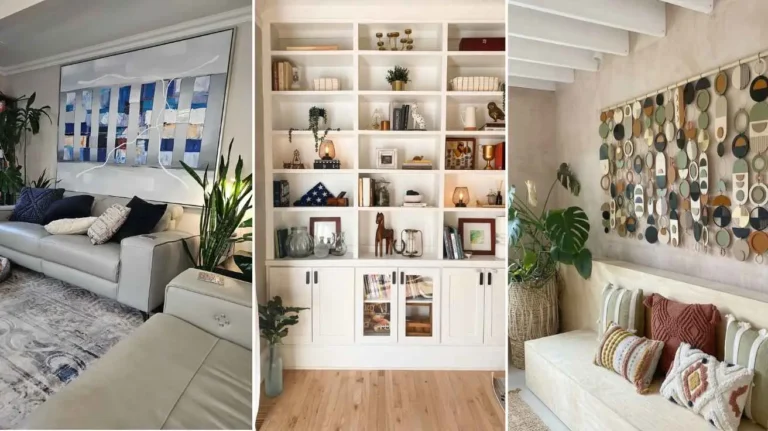
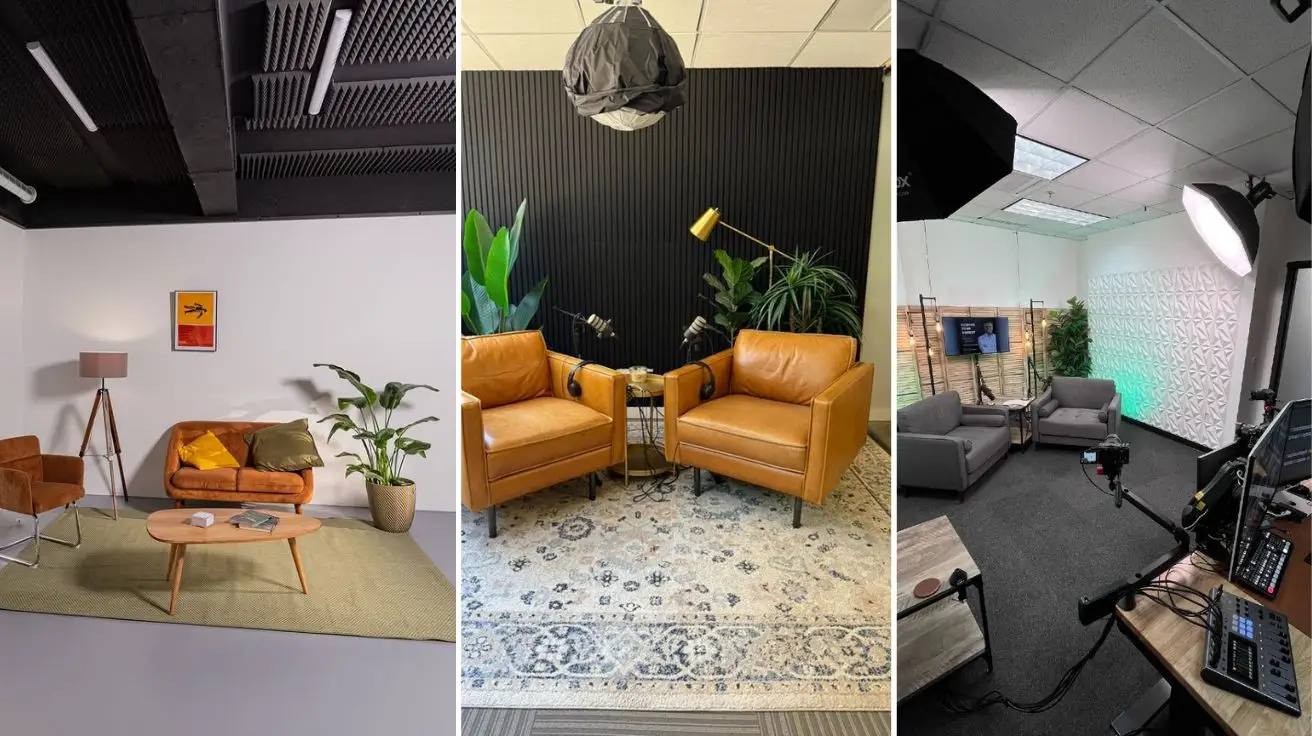
Podcast Studio Design Ideas for Creating a Comfortable and Professional Sound
Every great podcast begins with a voice, but what truly shapes that voice is the space behind it. A podcast studio is more than four walls and a microphone. It is where stories gain depth, conversations feel intimate, and ideas sound professional even to first-time listeners. The right podcast studio design can turn nervous beginners into confident hosts and casual chats into unforgettable episodes. Many people believe that podcast studios must be expensive or require technical expertise.
That belief stops countless voices from being heard. The truth feels far more exciting. With smart choices, simple materials, and a clear creative vision, anyone can build a studio that feels welcoming, polished, and inspiring. This guide explores 14 podcast studio design approaches that balance comfort, sound quality, and personality—without overwhelming technical language. Each idea opens a new door, and some might spark a surprising twist at the end. Stay close, because the perfect setup might be simpler than expected.
Minimalist Home Podcast Studio Setup

A minimalist approach focuses on clarity, calm, and purpose. This style removes distractions and allows the voice to shine. Clean walls, neutral colors, and limited furniture help reduce visual clutter and mental stress. In a minimalist podcast studio design, every item earns its place. A desk, a comfortable chair, a microphone stand, and soft lighting often do the job. Sound treatment can blend into the design using plain acoustic panels or fabric wall art.
This setup works well for small rooms and apartments where space feels limited. The beauty of minimalism lies in control. Fewer objects mean fewer echoes, fewer distractions, and smoother recordings. This design also helps beginner podcasters feel less intimidated. The space feels open, breathable, and easy to manage. Over time, subtle upgrades like plants or warm LED lights can add character without ruining the simplicity. Sometimes, less truly delivers more impact.
Soundproofed Bedroom Podcast Studio

Turning a bedroom into a podcast studio feels practical and comforting. This design uses what already exists and upgrades it for sound quality. Soft surfaces like curtains, rugs, and bedding naturally absorb sound waves. This makes bedrooms ideal for recording clear audio. Foam panels can attach to walls behind the microphone to reduce echo. Closets filled with clothes often act as natural soundproofing zones.
Lighting should feel warm and calming to reduce tension during recording sessions. This podcast studio design works well for solo hosts and interview-style shows. The personal setting adds emotional warmth to conversations. Listeners often sense that comfort through the audio. With careful cable management and simple shelves for equipment, the bedroom remains functional and peaceful. This setup proves that professional sound does not require a separate building. A familiar space can become a powerful creative engine.
Budget-Friendly Podcast Studio Design

Cost should never silence creativity. A budget-friendly podcast studio design focuses on smart choices instead of expensive gear. Everyday items can transform sound quality dramatically. Thick blankets, yoga mats, and even wall tapestries reduce echo. A basic USB microphone paired with free recording software often delivers impressive results. Furniture can double as sound barriers when placed strategically.
This design empowers beginners who feel hesitant about investing money early. It also encourages experimentation. When mistakes feel affordable, learning becomes fun. Lighting can come from desk lamps or window light, creating a cozy atmosphere. Over time, upgrades can happen gradually without pressure. This approach builds confidence and consistency. Many successful podcasters began this way, slowly shaping their space as their voice grew stronger. Budget limitations often spark the most creative solutions.
Cozy Podcast Studio for Long Conversations

Comfort shapes voice more than most people realize. A cozy podcast studio design encourages relaxed speech and natural flow. Soft chairs, cushions, and warm textures help hosts forget the microphone. Earthy colors like beige, brown, and soft green calm the mind. Lamps with warm bulbs replace harsh overhead lights.
Sound treatment blends into the decor using fabric panels or bookshelves. This design works beautifully for storytelling, interviews, and emotional topics. When the body feels comfortable, the voice sounds authentic. Listeners connect more deeply. This studio style invites longer sessions without fatigue. It feels less like a workspace and more like a conversation corner. That emotional safety becomes audible in every episode.
Small Space Podcast Studio Design
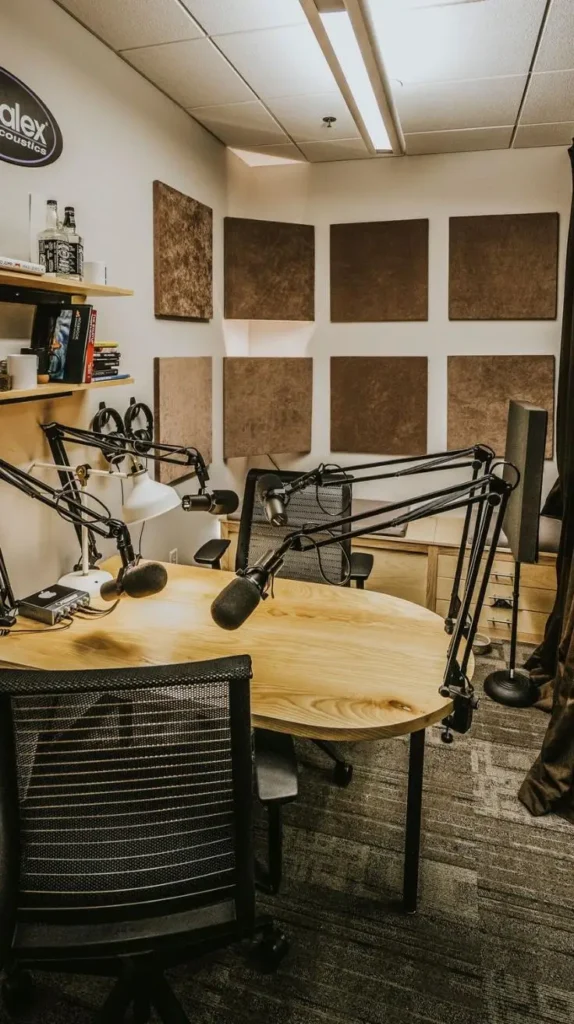
A small room can initially feel limiting, but with the right mindset, it becomes a focused and creative zone. When space is tight, every inch matters, and that awareness leads to smarter decisions. Vertical storage plays a huge role here. Wall-mounted shelves, pegboards, and floating desks free up floor space while keeping equipment organized and easily accessible. Corners often become powerful recording spots because sound waves bounce less when treated correctly.
Adding acoustic panels behind and beside the microphone helps control echo without overwhelming the room. Light-colored walls and soft lighting make the space feel open rather than cramped. Cable management also becomes essential in small studios, as tangled wires quickly add visual stress.
This type of setup teaches discipline and intention. Over time, the space starts to feel personal and efficient rather than small. Many podcasters find that limited space actually improves focus, reduces distractions, and builds a deeper connection with the microphone.
Podcast Studio Design with Natural Elements
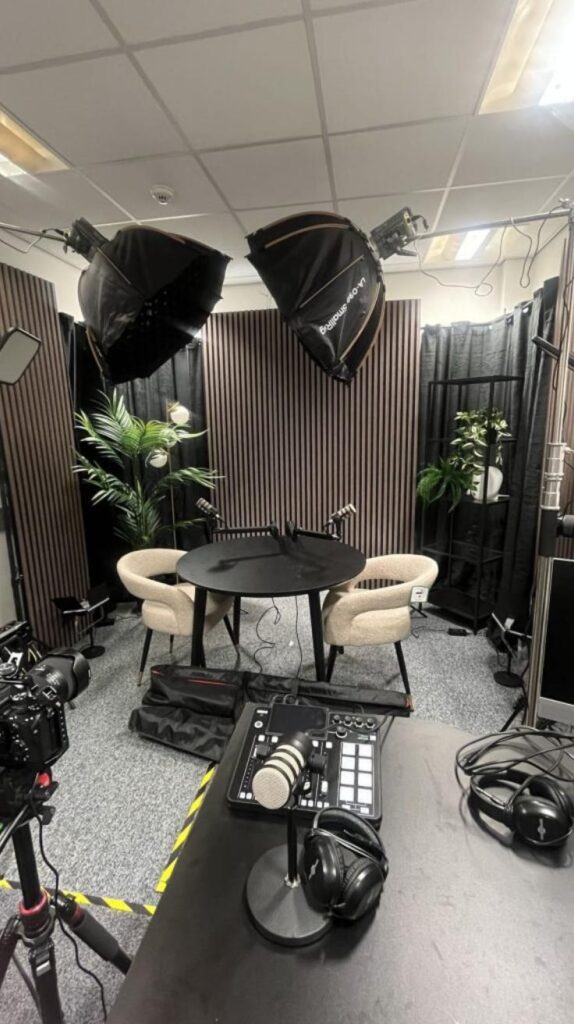
Bringing nature into a recording space creates an immediate emotional shift. Natural elements soften the technical feel of equipment and help the mind relax before recording. Indoor plants serve both visual and acoustic purposes, gently absorbing sound while adding warmth. Wooden desks, bamboo shelves, or cork panels introduce texture and reduce harsh reflections.
Natural light, when controlled with curtains or blinds, boosts energy and keeps long recording sessions from feeling draining. This design approach works especially well for wellness, education, and storytelling content, where calm and clarity matter. The environment feels balanced and welcoming, which is reflected in the voice. Stress levels drop, breathing becomes steady, and conversations flow more naturally.
Even listeners sense the calm through audio tone alone. A nature-inspired studio reminds creators that podcasting is about connection, not complexity. The room feels alive, supportive, and grounded, making every session feel purposeful rather than rushed.
Professional Podcast Studio Design for Interviews
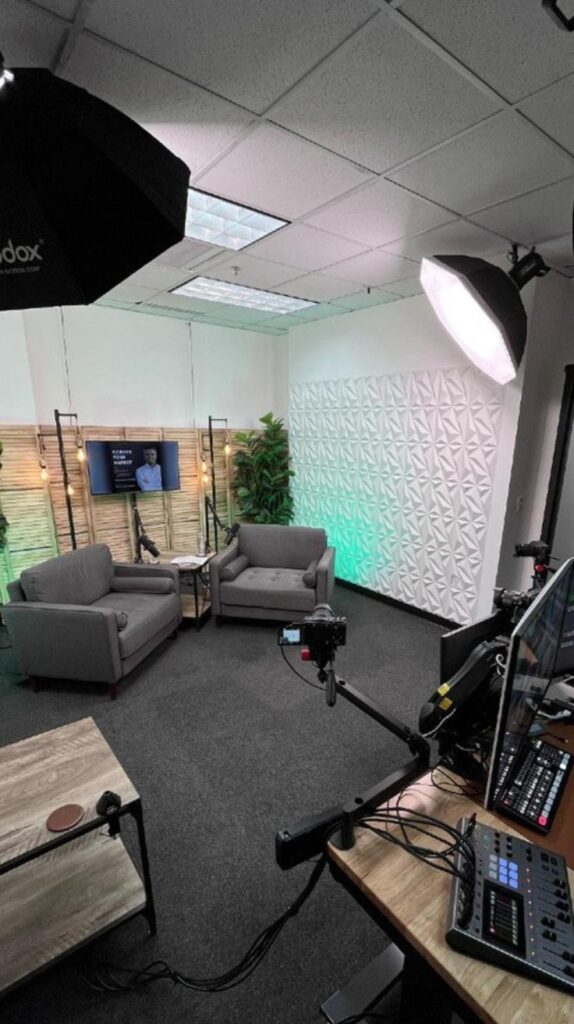
Interview-focused spaces need structure without stiffness. A professional layout creates balance between host and guest, helping both feel equally important. Seating arrangement matters more than many expect. Chairs placed at a comfortable distance allow natural eye contact while keeping microphones positioned correctly.
Matching equipment ensures consistent sound quality and avoids awkward adjustments mid-conversation. Sound treatment focuses on reducing reflections without making the room feel closed off. Lighting should feel soft and neutral, allowing guests to relax instead of feeling examined. Subtle decor adds warmth without stealing attention. This type of space builds trust quickly.
Guests sense preparation and respect, which encourages openness. Conversations deepen, stories unfold naturally, and silence feels comfortable rather than tense. A professional interview studio does not feel intimidating when designed thoughtfully. Instead, it becomes a safe place for honest dialogue, where voices feel valued and heard.
Portable Podcast Studio Design

Freedom changes everything in podcasting. A portable setup allows creators to record wherever inspiration strikes. This design focuses on lightweight, durable tools that pack easily and set up fast. Compact microphones, foldable stands, and travel-friendly sound panels reduce stress and save time. Consistency becomes the priority.
Using the same equipment across locations keeps audio quality stable, even when the surroundings change. This setup suits podcasters who travel, collaborate frequently, or record guests in their own environments. It also reduces scheduling barriers, making interviews easier to arrange. Recording outside a fixed space adds energy and variety to content.
Cafes, offices, and homes each bring a unique atmosphere. The key lies in preparation. A portable studio turns challenges into opportunities, allowing stories to be captured where they naturally unfold. That flexibility keeps podcasting exciting and deeply human.
Creative Podcast Studio with Wall Art

Creativity thrives when the environment speaks back. Wall art transforms a plain recording space into a visual story that fuels passion. Posters, framed quotes, murals, or handmade art pieces express the tone of the show and the personality behind it. Art also helps break up sound reflections when placed thoughtfully.
Colors influence mood, and the right palette energizes the voice before the microphone even turns on. This design approach suits entertainment, culture, and commentary podcasts where expression matters. The room feels alive rather than functional. Recording sessions feel exciting instead of routine.
Visual inspiration keeps motivation high during long production cycles. Even though listeners cannot see the walls, they hear the confidence and enthusiasm they create. A creative space reminds hosts why they started sharing their voice in the first place.
Personalized Podcast Studio Design

A personalized studio reflects the heart behind the voice. This space tells a story before a single word is spoken. Colors, textures, and decor align with the message being shared. A motivational quote, a favorite photo, or a meaningful object can change how a host feels during recording. That emotional comfort translates directly into vocal confidence.
The room feels familiar and safe, which encourages honesty and expression. Personalization does not mean clutter. Intentional choices create balance and focus. Over time, the space grows alongside the podcast, evolving naturally with new goals and experiences. Recording becomes a ritual, not a chore. Listeners sense consistency and authenticity through tone alone.
The voice sounds grounded and real. This design helps hosts stay connected to their purpose, especially during challenging moments. A personalized studio becomes more than a workspace; it becomes a creative refuge.

She has nearly 5 years of expertise in organic gardening, plant pests and diseases, landscape design, horticulture, and permaculture. She is a Master Gardener and Horticulturist.
She includes keywords and phrases that raise the content’s search engine ranking because she has a good grasp of SEO best practices.
- Fall Apartment Decor Ideas to Create a Warm and Cozy Home - August 31, 2026
- Bathroom Lighting Ideas to Make Your Space Feel Brighter, Warmer, and More Beautiful - August 30, 2026
- Fall Kitchen Decor Ideas to Create a Warm and Cozy Seasonal Space - August 25, 2026