
Designing a Combined Living and Dining Room
Creating a harmonious space that serves multiple purposes is a growing trend in home decor. A well designed multi-functional space can enhance the functionality of your home while maintaining its aesthetic appeal.
With the rise of open plan homes, the need to merge different areas, such as the living and dining areas, has become increasingly popular. This design approach not only optimizes the available space but also fosters a sense of togetherness among family members and guests.
Effective interior design is crucial in making the most of a combined space. By incorporating thoughtful design elements, homeowners can create a seamless transition between different areas, resulting in a cohesive and inviting atmosphere.
Understanding the Challenges and Benefits of Combined Spaces
When it comes to designing a combined living and dining room, homeowners often struggle to achieve a balance between form and function. This challenge is at the heart of creating a successful multi-functional space.
Common Challenges in Combined Living and Dining Areas
One of the primary home decor challenges is defining separate areas within a single room. Without clear boundaries, the space can feel cluttered and disorganized. Additionally, balancing the needs of different activities, such as relaxation and dining, can be difficult.
Advantages of Multi-functional Spaces
Despite the challenges, multi-functional spaces offer several advantages. They provide increased flexibility and efficiency, allowing homeowners to make the most of their available space. By combining living and dining areas, homeowners can also create a sense of openness and flow.
Setting Clear Design Goals for Your Home
To overcome the challenges and capitalize on the benefits, it’s essential to set clear design goals. This involves considering your lifestyle, preferences, and the specific needs of your household. By doing so, you can create a space that is both functional and aesthetically pleasing, aligning with your interior design tips and goals.
Planning Your Combined Living and Dining Room Layout
To maximize the potential of your combined living and dining room, it’s essential to plan the layout thoughtfully. Effective space planning is crucial in creating a harmonious and functional area that meets your needs.
Assessing Your Available Space
The first step in planning your combined living and dining room layout is to assess the available space. Measure the room’s dimensions, noting the location of doors, windows, and any architectural features. This will help you understand the room’s limitations and opportunities.
Determining Traffic Flow Patterns
Traffic flow is a critical aspect of room design. Consider how people will move through the space, ensuring a smooth and safe passage between different areas. Avoid cluttering the room with too much furniture, and leave enough space between pieces for comfortable navigation.
Creating Functional Zones
Creating functional zones within your combined living and dining room is vital for its success. By defining different areas for living, dining, and potentially other activities, you can create a multi-functional space that is both practical and aesthetically pleasing.


Source – HomeDecorating
Living Area Zone Planning
- When planning the living area zone, consider the placement of your sofa, armchairs, and coffee table. Ensure there’s enough space for comfortable seating and movement. Think about the flow of conversation and the viewing direction for any TVs or focal points.
Dining Area Zone Planning
- The dining area should be planned around your dining table and chairs, with enough space to move around comfortably. Consider the proximity to the kitchen and the flow of traffic. A well-placed area rug can help define the dining space.
Transitional Space Considerations
- Transitional spaces, such as the area between the living and dining zones, should be considered to ensure a smooth flow between the different areas. Use furniture placement, rugs, and lighting to create a cohesive and harmonious transition.
Effective Layout Options for a Combined Living and Dining Room
Creating an effective layout for a combined living and dining room involves understanding your space and needs. A well-designed layout can enhance the functionality and aesthetic appeal of your home, making it a welcoming space for both everyday living and entertaining.
Open Concept Layouts for American Homes

Open concept layouts are popular in American homes for their ability to create a sense of spaciousness and facilitate interaction between family members and guests. By removing walls between the living and dining areas, you can create a large, open space that feels modern and airy.
Divided Space Layouts

Divided space layouts offer an alternative for those who prefer more defined areas within their combined living and dining room. Using partial walls, screens, or furniture, you can create separate zones for living and dining without completely isolating them.
L-Shaped Arrangements


Source – DesignMyRoom
L-shaped arrangements are particularly useful in rectangular rooms, allowing you to create distinct areas for living and dining while maintaining an open feel. This layout is versatile and can be adapted to various room sizes.
Parallel Arrangements
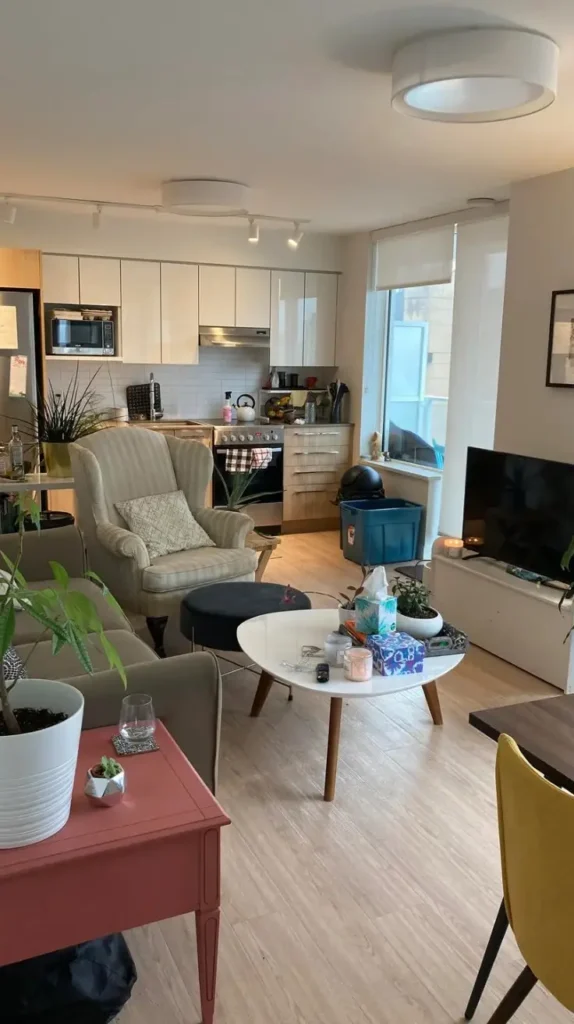
Parallel arrangements involve placing furniture along opposite walls, creating a clear distinction between the living and dining areas. This layout is effective in long, narrow rooms and can help to create a sense of balance.
Space-Maximizing Solutions for Smaller Homes
In smaller homes, maximizing space is crucial. Using multi-functional furniture, minimizing clutter, and selecting a light color palette can help create the illusion of more space. Consider using wall-mounted shelves and compact furniture designs to keep the floor clear and enhance the sense of openness.
Selecting the Right Furniture for Dual-Purpose Spaces
When it comes to furnishing a combined living and dining area, it’s essential to strike a balance between style and practicality. The right furniture can make all the difference in creating a harmonious and functional space.


Source – interiordecorating
Space-Saving Furniture Options
For smaller combined rooms, space-saving furniture is a must. Consider using wall-mounted shelves, foldable dining tables, or nesting coffee tables to save on floor space. These pieces not only provide functionality but also help maintain an open feel.
Multifunctional Furniture Pieces
Multifunctional furniture is another great solution for dual-purpose spaces. Look for items like storage ottomans, console tables with storage, or sofas with built-in recliners. These pieces serve multiple purposes, reducing clutter and enhancing the room’s functionality.
Scale and Proportion Considerations
Ensuring that your furniture is proportional to the room size is crucial. Oversized furniture can make a room feel cramped, while too-small pieces can make it feel empty. Measure your space carefully and choose furniture that fits comfortably, leaving enough room for traffic flow.
Furniture Arrangement Tips
Arranging furniture in a way that defines different areas within the room can help create a sense of separation. Use area rugs, lighting, and furniture placement to delineate the living and dining spaces. Consider creating a focal point, like a statement piece of art or a bold-colored sofa, to draw the eye and create visual interest.
Popular US Furniture Styles for Combined Spaces
In the US, popular furniture styles for combined living and dining rooms include modern, farmhouse, and coastal designs. These styles often feature clean lines, natural materials, and a mix of textures, which can add depth and visual interest to the space. Choose a style that reflects your personal taste and complements the overall aesthetic of your home.
Creating Visual Separation in Your Combined Living and Dining Room
When designing a combined living and dining room, creating visual separation between the different areas is crucial for a harmonious and functional space. This separation can be achieved through various design elements that distinguish one area from another without compromising the openness of the room.


Source – HomeDecorating
Using Area Rugs to Define Spaces
Area rugs are an effective way to visually separate different zones within a combined room. By choosing rugs with different patterns or colors for the living and dining areas, you can create a clear distinction between the spaces while maintaining a cohesive look through complementary design elements.
Furniture Placement as Room Dividers
Strategic furniture placement can serve as a natural divider between the living and dining areas. For instance, a sofa or a console table positioned perpendicular to the flow of traffic can effectively separate the two spaces without the need for walls.
Decorative Screens and Partitions
Decorative screens or partitions offer a versatile solution for creating visual separation. These elements can be moved or adjusted as needed, allowing for flexibility in the room’s layout. They come in various styles, from modern and sleek to traditional and ornate, ensuring there’s a suitable option for any decor.
Lighting to Distinguish Areas
Lighting can play a significant role in defining different areas within a combined room. Using different lighting fixtures or adjusting the lighting intensity over the living and dining areas can help create a visual distinction between the spaces.
Ceiling and Floor Treatments for Zone Definition
Ceiling and floor treatments offer another effective method for creating visual separation. Techniques such as using different flooring materials or colors, or applying ceiling treatments like beams or different finishes, can help delineate the different zones within the room.
Color Schemes and Materials for Cohesive Design
A well-designed color scheme and material selection are crucial for a harmonious combined living and dining space. When these elements are chosen thoughtfully, they can create a cohesive and inviting atmosphere.

- Unified Color Palettes – A unified color palette is essential for creating a sense of continuity in a combined room. Choose a few core colors that complement each other and apply them consistently throughout the space. This can include wall colors, furniture upholstery, and decorative accents.
- Complementary Material Selection – The selection of materials can greatly impact the overall aesthetic of the room. Mixing different materials, such as wood, metal, and glass, can add depth and interest. However, it’s essential to choose materials that complement each other in terms of texture and color.
- Using Accent Colors to Define Areas – Accent colors can be used to differentiate between the living and dining areas. By introducing a bold or contrasting color in specific zones, you can create visual separation without physical barriers.
- Texture Variations for Visual Interest – Incorporating texture variations through furniture, rugs, and decorative elements can add visual interest to the space. Mixing smooth surfaces with rougher textures can create a dynamic and engaging environment.
- Current Color Trends for American Homes – Staying informed about current color trends can help inspire your design choices. Currently, many American homes are embracing calming neutrals, earthy tones, and bold accent colors. Consider how these trends might fit with your overall design vision.
Lighting Solutions for Multi-functional Spaces
Lighting solutions play a pivotal role in enhancing the ambiance and usability of multi-functional spaces. A combined living and dining room requires a thoughtful lighting plan to accommodate different activities and moods.
Layered Lighting Approaches
A layered lighting approach combines different light sources to achieve the desired ambiance and functionality. This typically includes a mix of overhead lighting, table lamps, and floor lamps. By layering light, you can create a versatile space that adapts to various needs, from bright task lighting during the day to softer ambient lighting in the evening.
Task Lighting for Different Activities
Task lighting is essential for specific activities such as reading, cooking, or working. In a combined living and dining room, task lighting can be achieved through table lamps, under-cabinet lighting, or pendant lights above the dining table. This focused lighting helps to illuminate areas where tasks are performed, reducing eye strain and improving functionality.
Ambient Lighting Considerations
Ambient lighting sets the overall mood of the space. It can be achieved through overhead lighting fixtures, such as recessed lights or a stylish chandelier. Ambient lighting should be soft and gentle, providing a comfortable level of brightness that allows for relaxation and social interaction.
Smart Storage Solutions for Combined Spaces
Smart storage solutions can transform combined living and dining spaces into organized havens.


Source – HomeDecorating
Built-in Storage Options
Built-in storage is an excellent way to maximize space in combined living and dining rooms. Consider installing shelving units, cabinets, or storage benches that blend seamlessly with the room’s décor.
Dual-Purpose Storage Furniture
Dual-purpose furniture pieces, such as storage ottomans or coffee tables with storage, can significantly reduce clutter. These items serve multiple functions, providing both a place to sit or display items and a hidden storage compartment.
Minimizing Visual Clutter
To minimize visual clutter, it’s essential to keep surfaces clear and tidy. Use decorative baskets, bins, or trays to corral small items, and consider implementing a “one in, one out” policy to prevent clutter buildup.
Organizing for Different Activities
Combined living and dining spaces often host various activities, from dining and socializing to working and relaxing. Organize storage around these different activities, ensuring that necessary items are within easy reach.
Hidden Storage Ideas for Small Spaces
For smaller combined spaces, hidden storage is a lifesaver. Look for furniture with hidden compartments, or use under-furniture storage bins to keep items out of sight. This approach helps maintain a clean and uncluttered appearance.
Decorating and Styling Your Combined Living and Dining Room
A well-designed living and dining area can be a true centerpiece of your home. To achieve this, it’s essential to strike the right balance between form and function. By incorporating thoughtful decorating and styling elements, you can create a space that is both beautiful and functional.


Source – DesignMyRoom
Artwork and Wall Decor Placement
Strategic placement of artwork and wall decor can greatly enhance the aesthetic appeal of your combined living and dining room. Consider creating a focal point in the room with a statement piece of art or a collection of framed photographs. When choosing wall decor, ensure it complements the overall style and color palette of the space.
Accessorizing for Cohesion
Accessories play a crucial role in tying together the different areas of a combined living and dining room. Use decorative items such as vases, candle holders, and decorative bowls to add visual interest and create a cohesive look. Choose accessories that reflect your personal style and complement the room’s color scheme.
Plants and Natural Elements
Incorporating plants and natural elements can bring warmth and vitality to your combined living and dining area. Select plants that thrive in the room’s lighting conditions and use natural elements like woven baskets or a vase with branches to add texture and depth.
Seasonal Decor Transitions
To keep your space feeling fresh and updated, incorporate seasonal decor transitions. This can be as simple as changing throw pillows, adding seasonal flowers, or switching out decorative accents to reflect the current season.
Personal Touches That Unify the Space
Adding personal touches is key to making your combined living and dining room feel truly yours. Display personal items like family photos, heirlooms, or collectibles to create a sense of warmth and personality in the space.
Bringing It All Together: Design Inspiration for American Homes
Designing a combined living and dining room can be a challenging yet rewarding task. By understanding the challenges and benefits of multi-functional spaces, you can create a harmonious and functional area that meets your needs.
American homes are embracing open-concept living, and with the right design inspiration, you can create a space that is both stylish and functional. Consider incorporating current interior design trends, such as layered lighting and multifunctional furniture, to enhance the ambiance and functionality of your combined living and dining room.
Read

She has nearly 5 years of expertise in organic gardening, plant pests and diseases, landscape design, horticulture, and permaculture. She is a Master Gardener and Horticulturist.
She includes keywords and phrases that raise the content’s search engine ranking because she has a good grasp of SEO best practices.
- Latest Decorating Trends That Are Redefining Modern Homes - January 23, 2026
- Small Gym Room Ideas That Turn Tight Spaces Into Power Zones - January 21, 2026
- Cozy Reading Nook Ideas That Turn Any Corner Into a Peaceful Escape - January 20, 2026